


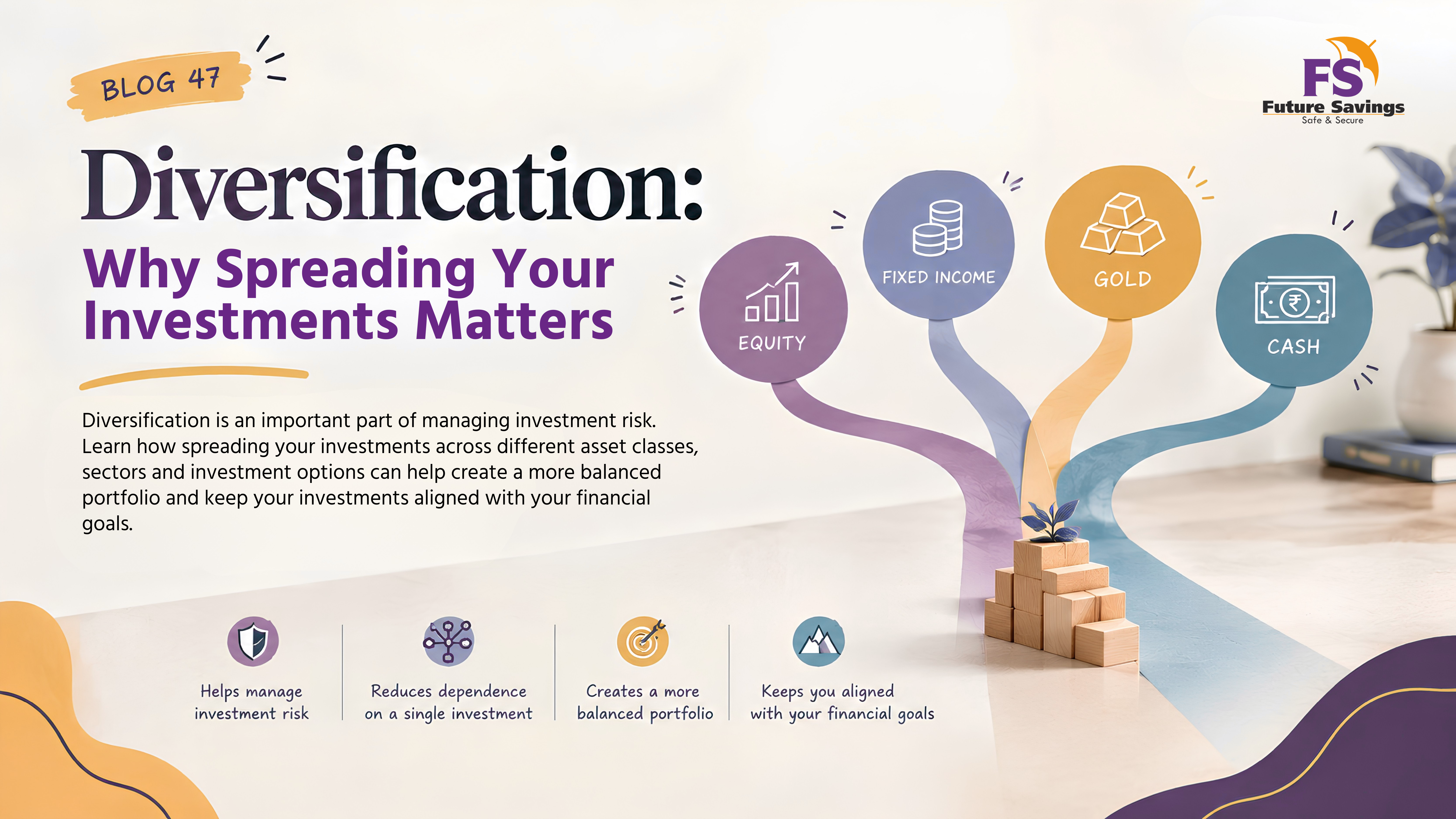
Investing is not just about choosing investments that can potentially earn good returns. It is also about managing risk and making sure your money is not overly dependent on one investment or one type of asset.
This is where diversification becomes important.
Diversification means spreading your investments across different asset classes, sectors, industries or investment options instead of putting all your money in one place. The idea is simple: if one investment does not perform well, the impact on your overall portfolio may be reduced because other investments may perform differently.
What Does Diversification Mean?
Imagine putting all your savings into one investment. If that investment falls in value, a large portion of your portfolio could be affected.
Now imagine spreading the same money across different investments. Some may rise, some may remain stable, and others may decline. Since they may not all move in the same direction at the same time, diversification can help create a more balanced portfolio.
Diversification does not mean investing in as many options as possible. It means choosing investments that serve different purposes and have different risk and return characteristics.
Why Is Diversification Important?
1. Helps Manage Investment Risk
Different investments respond differently to market conditions. By spreading your money across various investments, you may reduce the impact of poor performance from any one investment.
For example, if one sector faces a downturn, investments in other sectors may not be affected to the same extent.
2. Reduces Dependence on a Single Investment
Depending heavily on one company, sector or asset class can expose your portfolio to concentrated risk.
Diversification reduces this dependence by distributing your money across multiple investments.
3. Creates a More Balanced Portfolio
Different asset classes can play different roles in a portfolio.
For example:
- Equities can provide long-term growth potential.
- Fixed-income investments can provide greater stability and predictable income.
- Gold and other alternatives may provide another layer of diversification.
- Cash or cash equivalents can help meet short-term needs and emergencies.
The right combination depends on your financial goals, time horizon and risk tolerance.
4. Helps You Stay Focused on Long-Term Goals
Markets can go through periods of volatility. A well-diversified portfolio can help avoid having your entire investment strategy depend on the performance of one particular investment.
This can make it easier to stay focused on your financial goals instead of reacting to every market movement.
Diversification Does Not Mean Owning Everything
A common misconception is that more investments automatically mean better diversification. That is not necessarily true.
Owning several mutual funds, for example, does not guarantee that your portfolio is well diversified if those funds hold many of the same companies or sectors.
Similarly, investing in multiple stocks from the same industry may still leave you exposed to the same sector-specific risks.
Effective diversification is about reducing concentration, not simply increasing the number of investments.
How Can You Diversify Your Portfolio?
There are several ways to approach diversification:
Across asset classes:
Consider a suitable mix of equities, fixed income, gold, cash and other investments based on your needs.
Across sectors:
Avoid concentrating your equity investments in just one industry.
Across companies:
Holding investments across different companies can reduce dependence on the performance of a single company.
Across investment types:
Different investment products can serve different financial needs, from liquidity and stability to long-term growth.
However, diversification should always be based on your financial plan rather than simply following what others are investing in.
Diversification Should Match Your Financial Goals
There is no single diversification strategy that works for everyone.
Someone saving for a goal that is only a few years away may have different needs from someone investing for a long-term goal such as retirement.
Your risk tolerance, financial goals, time horizon, income and existing investments should all be considered when deciding how to diversify.
It is also important to review your portfolio periodically. Changes in your goals, income or market conditions can affect whether your current asset allocation continues to suit your needs.
The Bottom Line
Diversification is not about avoiding all investment risk. No investment strategy can completely eliminate risk.
Instead, diversification is about managing concentration and creating a portfolio where different investments can play different roles.
Rather than putting all your money in one place, consider how your investments work together. A thoughtfully diversified portfolio can help you manage risk while staying aligned with your long-term financial goals.
The goal is not to find one perfect investment — it is to build a portfolio that works as a whole.
 Post Tags: