


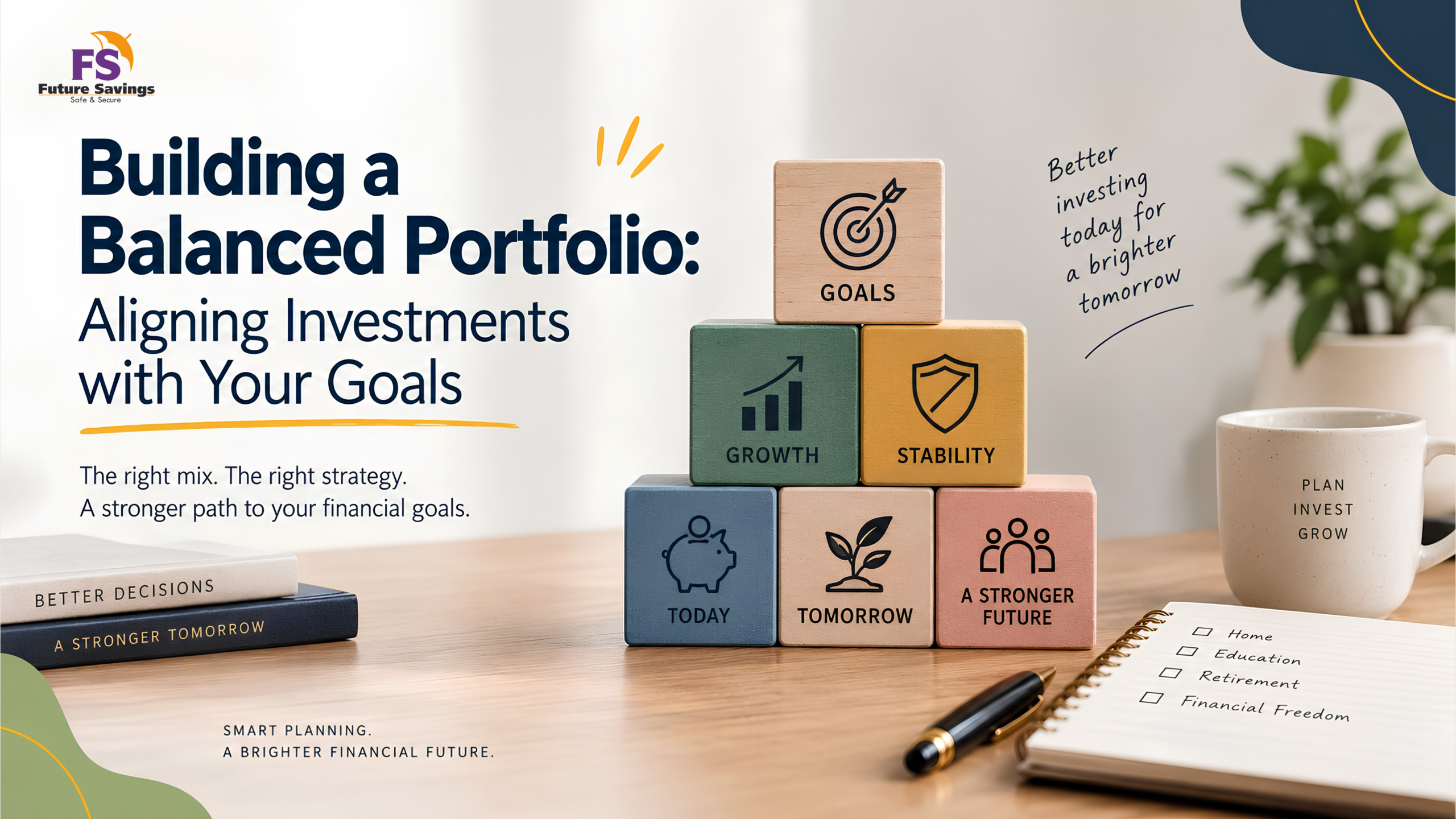
Investing is not simply about choosing the right products. It’s about making sure your investments support what you want to achieve financially.
Whether your goal is buying a home, funding your child’s education, planning for retirement, or building long-term wealth, your investment strategy should be aligned with your financial goals, time horizon, and comfort with risk.
A balanced portfolio can help you manage risk while giving your money an opportunity to grow over time.
What Is A Balanced Portfolio?
A balanced portfolio is a combination of different types of investments, such as equity, debt, mutual funds, fixed-income instruments, and other suitable assets.
The idea is not to put all your money into one investment. Instead, your portfolio is spread across different asset classes based on your financial needs and risk profile.
This approach can help reduce the impact of poor performance in any one investment category.
Start With Your Financial Goals
Before deciding where to invest, identify why you are investing because different goals require different approaches.
For example:
- Short-term goals: You may prioritise stability and liquidity.
- Medium-term goals: You may consider a combination of growth and relatively stable investments.
- Long-term goals: You may have greater scope to include growth-oriented investments, depending on your risk tolerance.
Having clear goals makes it easier to decide how much to invest, where to invest, and for how long.
Understand Your Risk Profile
Every investor has a different ability and willingness to take risk.
Your risk profile can depend on factors such as:
- Income and financial stability
- Existing savings and investments
- Investment time horizon
- Financial responsibilities
- Comfort with market fluctuations
- Future financial needs
A portfolio that is suitable for one person may not be suitable for another. Understanding your risk profile can help you avoid taking more risk than you can comfortably manage.
Diversification Matters
Diversification means spreading investments across different asset classes rather than depending heavily on one.
For instance, an investor may combine growth-oriented assets with more stable investments to create a portfolio that reflects their goals and risk tolerance.
However, diversification does not mean simply owning many investments. A well-diversified portfolio should have investments that serve different purposes and work together as part of an overall strategy.
Review Your Portfolio Regularly
Your financial goals and circumstances can change over time.
A change in income, a new financial responsibility, a major purchase, or a shift in your investment horizon may require your portfolio to be reviewed.
Market movements can also change the proportion of different assets in your portfolio. Regular reviews can help ensure that your investments continue to match your original plan.
This process may include rebalancing, where investments are adjusted to bring the portfolio back in line with your intended asset allocation.
Avoid Investing Based on Market Noise
Markets can move up and down, and short-term changes can influence investor decisions.
Making frequent investment decisions based on market movements or trends may take you away from your long-term objectives.
Instead, focus on your goals, investment horizon, and overall financial plan. A disciplined approach can help you make decisions based on strategy rather than emotion.
The Bottom Line
A balanced portfolio is not about finding one perfect investment. It is about creating an investment strategy that works towards your financial goals while considering your risk tolerance and time horizon.
As your life and financial priorities evolve, your portfolio should evolve with them.
Invest with a purpose, diversify thoughtfully, and review your portfolio regularly. A well-planned investment strategy can help turn financial goals into achievable milestones.
 Post Tags: