


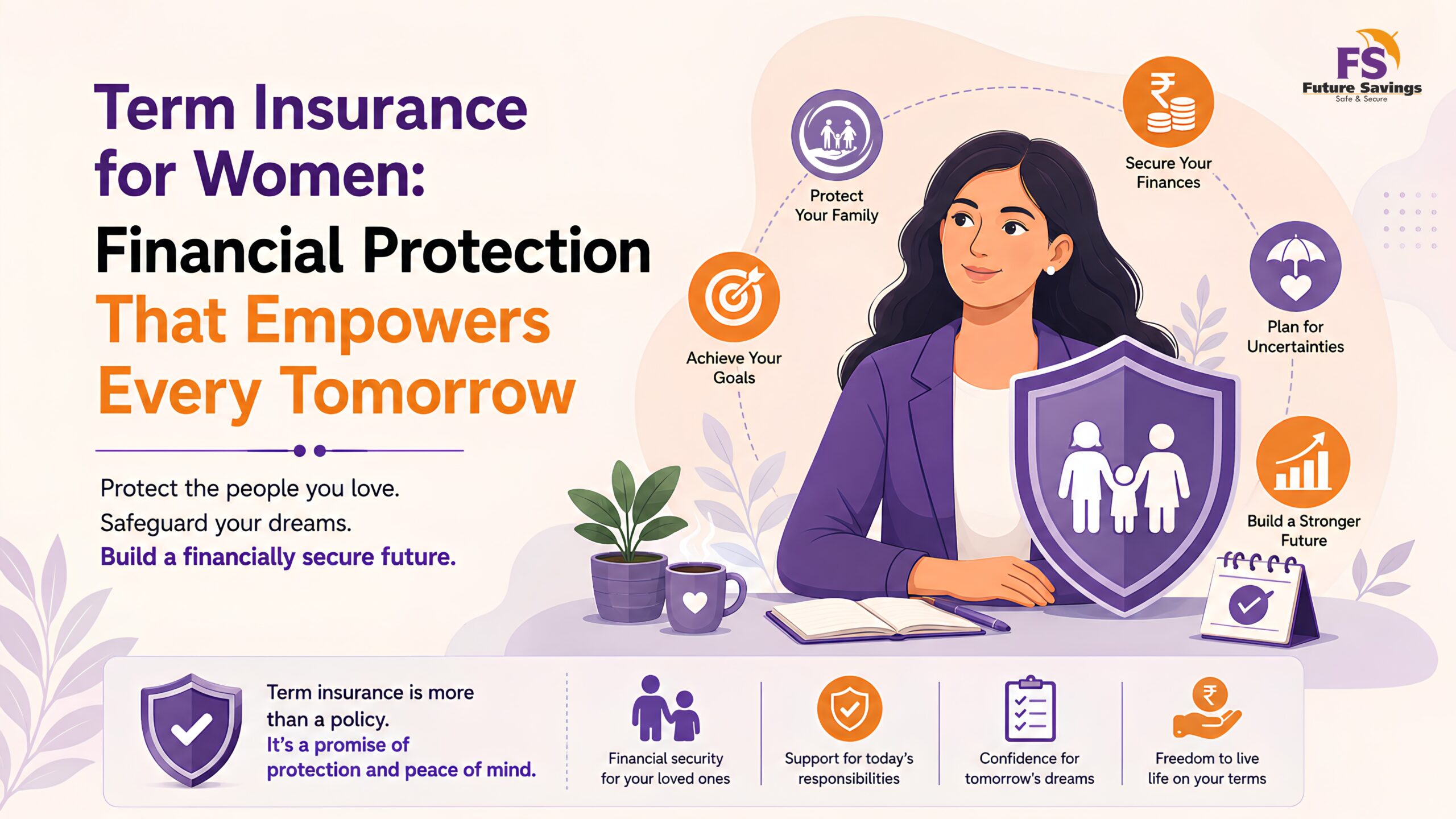
Financial protection is an important part of a strong financial plan. While women have traditionally been viewed primarily as dependents or caregivers, that picture has changed significantly. Today, women are earning incomes, building businesses, managing investments, supporting families and contributing to major financial goals.
With these changing roles comes the need to consider adequate financial protection.
Term Insurance is one way to create a financial safety net for loved ones. It provides life cover for a specified period, and if the insured person passes away during the policy term, the nominee receives the death benefit according to the policy terms.
For women who contribute financially to their households or have people depending on them, Term Insurance can play an important role in protecting their family’s financial future.
Why Does Term Insurance Matter for Women?
Financial responsibilities do not depend on gender. If a woman’s income contributes towards household expenses, children’s education, loan repayments or long-term financial goals, the loss of that income can create a significant financial burden for her family.
Term Insurance can help provide financial support during such a difficult situation.
Depending on the policy and the family’s circumstances, the death benefit can help the nominee manage important financial commitments such as:
- Everyday household expenses
- Outstanding loans and liabilities
- Children’s education
- Future financial goals
- Healthcare and other essential expenses
- The financial impact of losing the policyholder’s future income
The purpose is not simply to replace income. It is to give a family greater financial stability when they may need it most.
Women are Earning, Investing and Building Wealth
Women’s financial roles have evolved considerably. Many women today are independent earners, entrepreneurs, investors and business owners.
A working woman may be contributing towards:
- Rent or home loan payments
- Household expenses
- Children’s education
- Parents’ financial needs
- Retirement planning
- Investments and wealth creation
- Business expenses
This makes protecting her financial contribution an important part of financial planning.
Even when a woman’s income is not the primary household income, it can still be an important part of the family’s financial plan. Adequate life insurance coverage can help reduce the financial impact of an unexpected loss and support the family’s long-term plans.
Term Insurance and Financial Independence
Financial independence is about more than earning and saving money. It also involves protecting the financial progress that has already been made.
A woman may spend years building her career, creating savings and investments, paying off liabilities and supporting her family’s goals. Adequate life insurance can form part of a broader strategy designed to protect those financial efforts.
For women with financial dependents, Term Insurance can provide an additional layer of protection while they continue working towards their long-term goals.
How Much Term Insurance Cover Should a Woman Consider?
There is no single amount of coverage that is appropriate for every woman. The required cover should be based on individual circumstances, including:
- Current income
- Age
- Existing liabilities
- Number of financial dependants
- Household expenses
- Existing savings and investments
- Other life insurance coverage
- Long-term financial goals
A common mistake is choosing coverage based only on what seems affordable today. Instead, the focus should be on whether the coverage would provide meaningful financial support to the family if it were needed.
What Should Be Considered Before Buying Term Insurance?
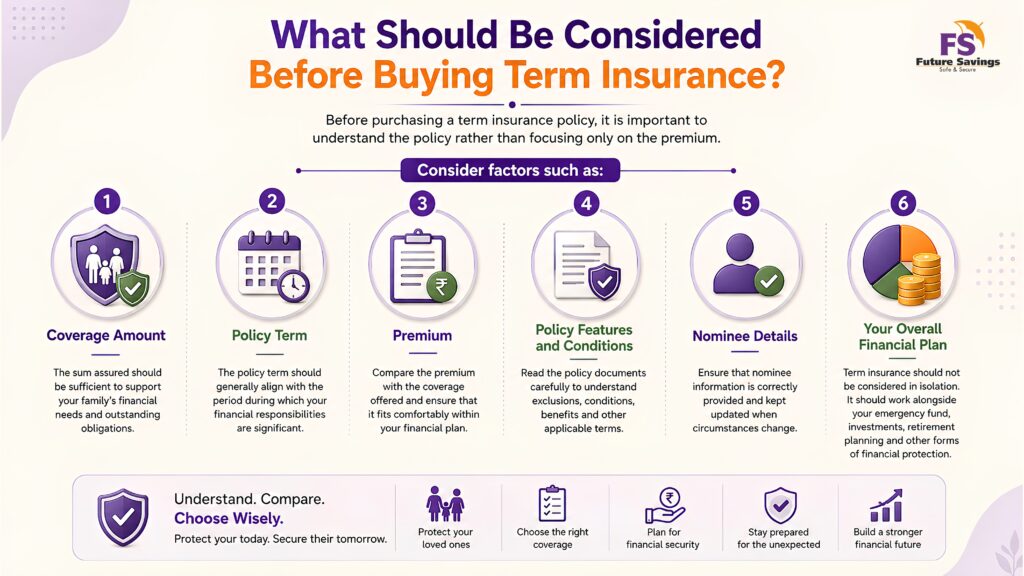
Before purchasing a term insurance policy, it is important to understand the policy rather than focusing only on the premium. Consider factors such as:
1. Coverage Amount
The sum assured should be sufficient to support your family’s financial needs and outstanding obligations.
2. Policy Term
The policy term should generally align with the period during which your financial responsibilities are significant.
3. Premium
Compare the premium with the coverage offered and ensure that it fits comfortably within your financial plan.
4. Policy Features and Conditions
Read the policy documents carefully to understand exclusions, conditions, benefits and other applicable terms.
5. Nominee Details
Ensure that nominee information is correctly provided and kept updated when circumstances change.
6. Your Overall Financial Plan
Term insurance should not be considered in isolation. It should work alongside your emergency fund, investments, retirement planning and other forms of financial protection.
Common Misconceptions About Term Insurance for Women
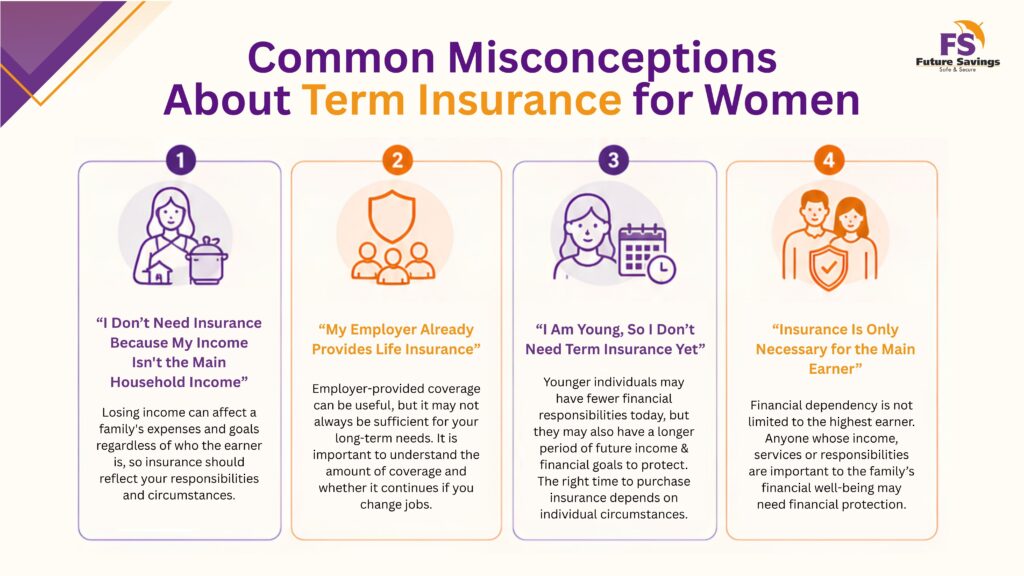
“I Don’t Need Insurance Because My Income Isn’t the Main Household Income.”
Not necessarily. The financial impact of losing any significant source of household income can affect a family’s ability to meet its expenses and long-term goals. The need for insurance should be assessed based on the individual’s financial responsibilities and the family’s overall circumstances.
“My Employer Already Provides Life Insurance.”
Employer-provided coverage can be useful, but it may not always be sufficient for your long-term needs. It is important to understand the amount of coverage provided and whether the cover continues if you change jobs.
“I Am Young, So I Don’t Need Term Insurance Yet.”
Being young does not automatically mean that life insurance is unnecessary. The need for coverage depends on factors such as financial responsibilities, dependents, liabilities and long-term goals.
“Insurance Is Only Necessary for the Main Earner.”
Financial dependency is not limited to the highest earner. If a woman’s income contributes meaningfully to her family’s financial commitments, her life insurance needs should also be considered as part of the family’s overall financial plan.
“Term Insurance Is About More Than a Payout.”
It can be easy to think of Term Insurance simply as a death benefit. However, its broader purpose is financial protection.
For a woman who has built a career, supports her family, contributes to household finances or has significant financial responsibilities, adequate protection can help safeguard the financial plans she has worked hard to build.
It is also an important reminder that financial planning should account for unexpected events, not just expected milestones.
“Building a Stronger Financial Future.”
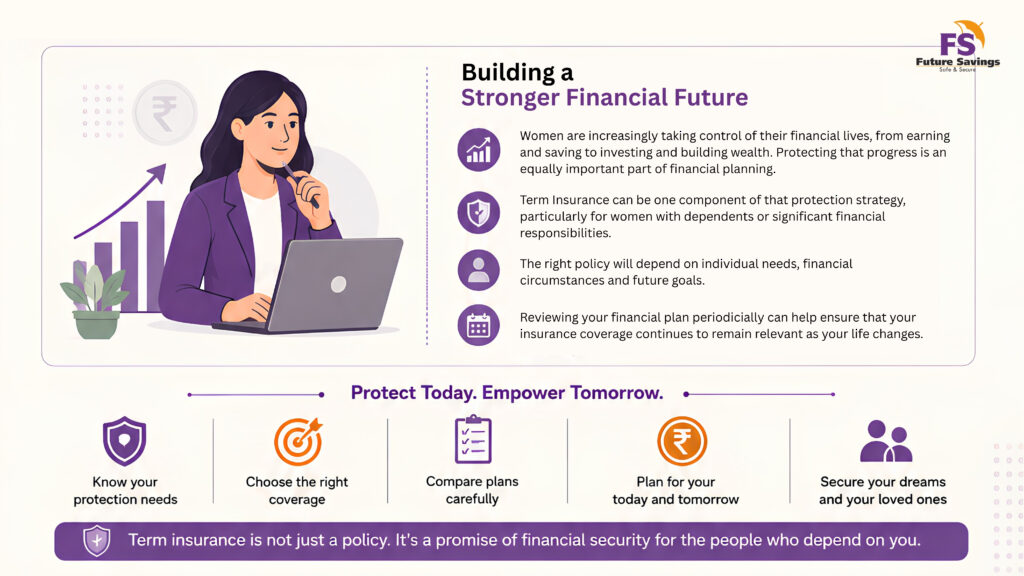
Women are increasingly taking control of their financial lives, from earning and saving to investing and building wealth. Protecting that progress is an equally important part of financial planning.
Term Insurance can be one component of that protection strategy, particularly for women with dependents or significant financial responsibilities.
The right policy will depend on individual needs, financial circumstances and future goals. Reviewing your financial plan periodically can help ensure that your insurance coverage continues to remain relevant as your life changes.
The Bottom Line
Financial security is not just about building wealth. It is also about protecting the people and goals that matter.
For women who earn, invest, support their families or have financial dependents, Term Insurance can be an important part of a comprehensive financial plan. By understanding their protection needs and choosing coverage thoughtfully, women can take another step towards creating a financially secure future for themselves and their loved ones.
Insurance is subject to policy terms, conditions and exclusions. Individuals should evaluate their financial needs and seek professional advice before making insurance decisions.
 Post Tags: