


Even intelligent and successful individuals can make costly financial mistakes due to emotions and cognitive biases. Learn how understanding the psychology of wealth can help you make smarter financial decisions and build long-term financial security.
When it comes to managing money, intelligence alone isn’t enough. Many successful professionals, entrepreneurs, and high-income earners still make financial decisions they regret after a while. This isn’t because they lack knowledge; it’s because, in certain situations, financial decision-making often becomes influenced by emotions, habits, and cognitive biases rather than logic.
Understanding the psychology behind financial decision-making is the first step towards building lasting wealth. By recognizing the mental patterns that influence our choices, we can make more informed decisions and create a stronger financial future.
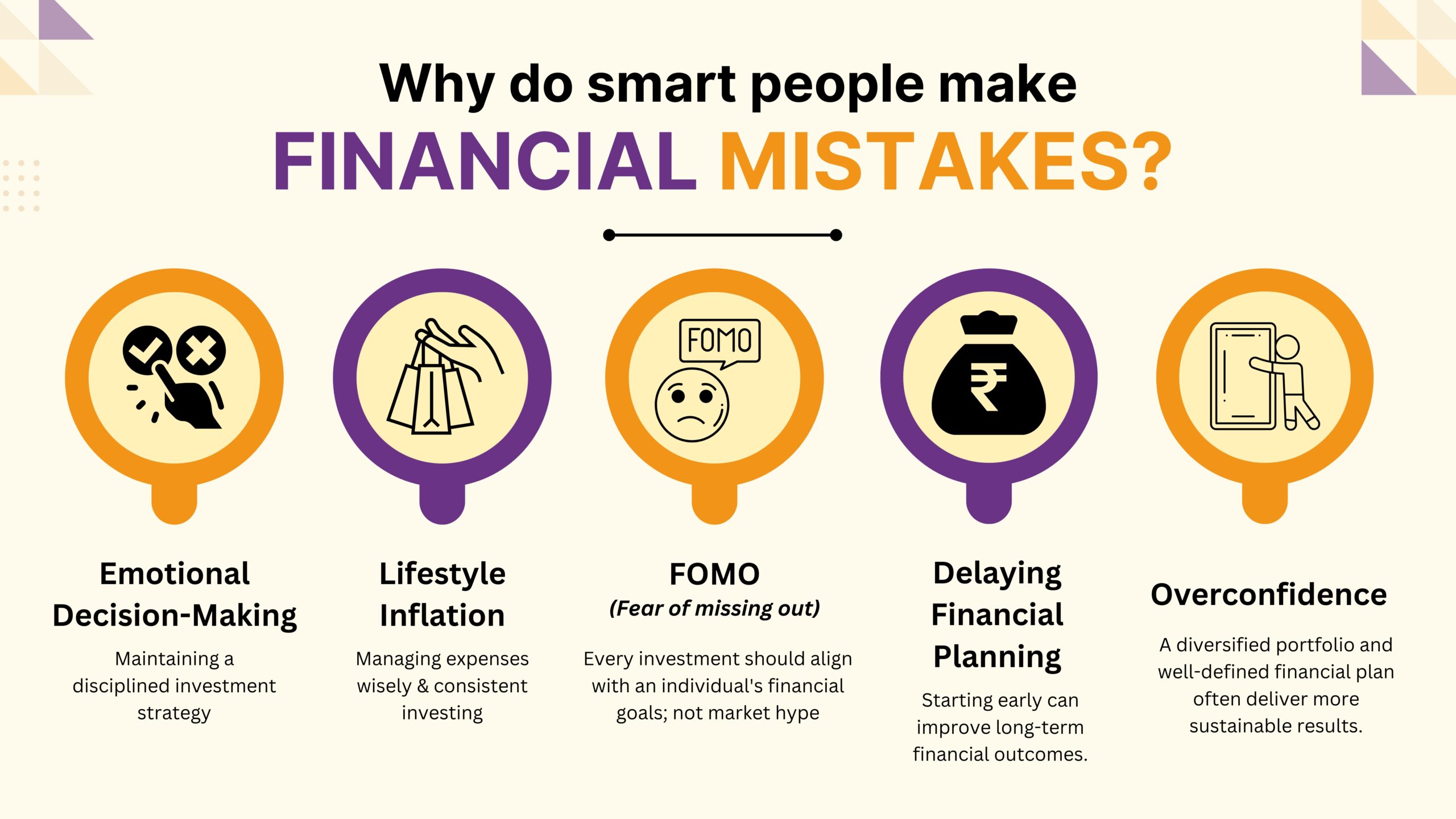
Why Do Smart People Make Financial Mistakes?
Money is deeply personal. It reflects our goals, fears, values, beliefs, and experiences. Even individuals with strong analytical skills can fall into common psychological traps that affect their financial well-being. Which is why, money management is crucial in today’s environment.
1. Emotional Decision-Making
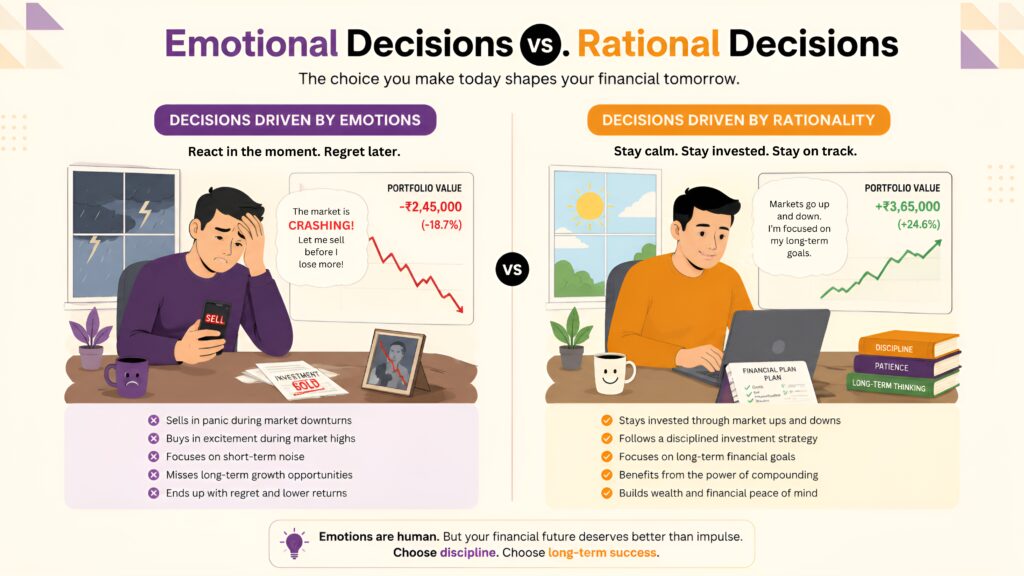
Emotions play a significant role in how we manage our finances. Fear during market downturns may cause investors to sell their investments prematurely, while excitement during market highs can lead to impulsive investment decisions.
Instead of reacting emotionally, successful investors focus on long-term financial goals and maintain a disciplined investment strategy.
2. Lifestyle Inflation
As income increases, spending often rises alongside it. A higher salary may lead to upgrading homes, purchasing luxury vehicles, or increasing discretionary spending. While enjoying financial success is important, unchecked lifestyle inflation can limit long-term wealth creation.
Building wealth isn’t just about earning more; it’s about managing expenses wisely and consistently investing for the future.
3. Overconfidence
Confidence is valuable, but overconfidence can become costly. Some individuals believe they can consistently predict market movements or outperform experienced financial professionals without proper research. Making investment decisions based solely on intuition or short-term market trends can expose investors to unnecessary risks.
A diversified portfolio and well-defined financial plan often deliver more sustainable results.
4. The Fear of Missing Out (FOMO)
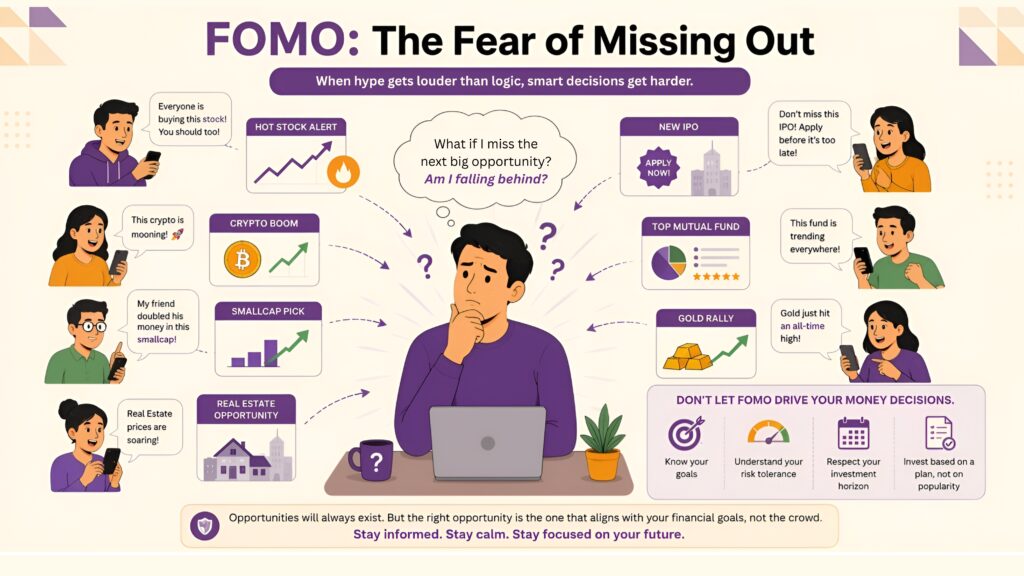
Whether it’s a trending stock, cryptocurrency, or the latest investment opportunity, the fear of missing out can encourage people to invest without fully understanding the risks involved.
Every investment should align with an individual’s financial goals, risk tolerance, and investment horizon; not social media trends or market hype.
5. Delaying Financial Planning
Many people postpone financial planning because retirement, insurance, or wealth creation feels like something that can wait. Unfortunately, delaying investments also means missing out on the power of compounding.
Starting early, even with modest investments, can significantly improve long-term financial outcomes.
Common Psychological Biases that Affect Financial Decisions
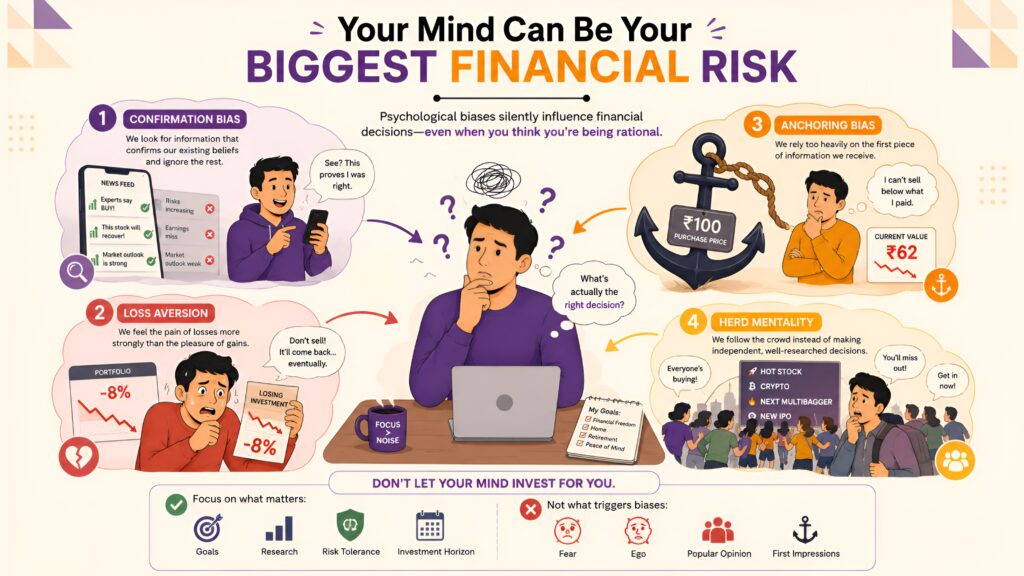
Our brains naturally rely on mental shortcuts to simplify decision-making. While helpful in everyday life, these shortcuts can sometimes lead to poor financial choices.
Loss Aversion
People generally feel the pain of losing money more strongly than the satisfaction of gaining it. As a result, they may avoid investing altogether or hold onto underperforming investments in the hope that losses will recover.
Confirmation Bias
Confirmation bias refers to people’s tendency to process information by looking for, or interpreting information that is consistent with their existing beliefs and values. Individuals often seek information that supports their existing beliefs while ignoring evidence that challenges them.
This biased approach to decision-making is largely unintentional, and it results in a person ignoring information that is inconsistent with their beliefs, which can thus, prevent objective financial decision-making.
Anchoring Bias
Anchoring bias describes people’s tendency to rely too heavily on the first piece of information they receive on a given topic. Regardless of the accuracy of that information, people use it as a reference point, or, like the name suggests, an anchor, to make subsequent judgements.
For instance, the first piece of information that a person might tend to heavily rely on could be the purchase price of an investment, even when current market conditions suggest a different course of action.
Herd Mentality
Many investors follow what everyone else is doing rather than making independent, well-researched decisions. However, popular investment choices are not always the right ones for every individual.
Building Better Financial Habits
While emotions cannot be eliminated, they can be managed through disciplined financial habits.
Here are a few strategies that can help:
- Define clear short-term and long-term financial goals.
- Create a diversified investment portfolio based on your risk profile.
- Review your financial plan periodically instead of reacting to daily market movements.
- Maintain an emergency fund to avoid making financial decisions under pressure.
- Protect your family’s future with adequate insurance coverage.
- Seek professional financial guidance when making significant investment decisions.
Consistency often produces better results than chasing quick financial gains.
The Role of Professional Financial Planning
Financial planning goes beyond selecting investments. It involves creating a structured approach that balances wealth creation, risk management, tax efficiency, retirement planning, and asset protection.
A qualified financial advisor can provide an objective perspective, helping individuals avoid emotionally driven decisions while aligning investments with long-term financial goals. Regular reviews and disciplined planning can help investors stay focused, regardless of changing market conditions.
The Path to Financial Confidence
Building wealth is as much about mindset as it is about money. Even the smartest individuals can make financial mistakes when emotions, biases, or impulsive decisions take control. The key is not to eliminate these tendencies but to recognize them and make conscious, informed choices.
Long-term financial success is rarely achieved through perfect timing or luck. Instead, it comes from consistent planning, disciplined investing, thoughtful risk management, and the willingness to seek expert guidance when needed.
By understanding the psychology behind financial decisions, individuals can make smarter choices today and build a more secure tomorrow.
 Post Tags: