


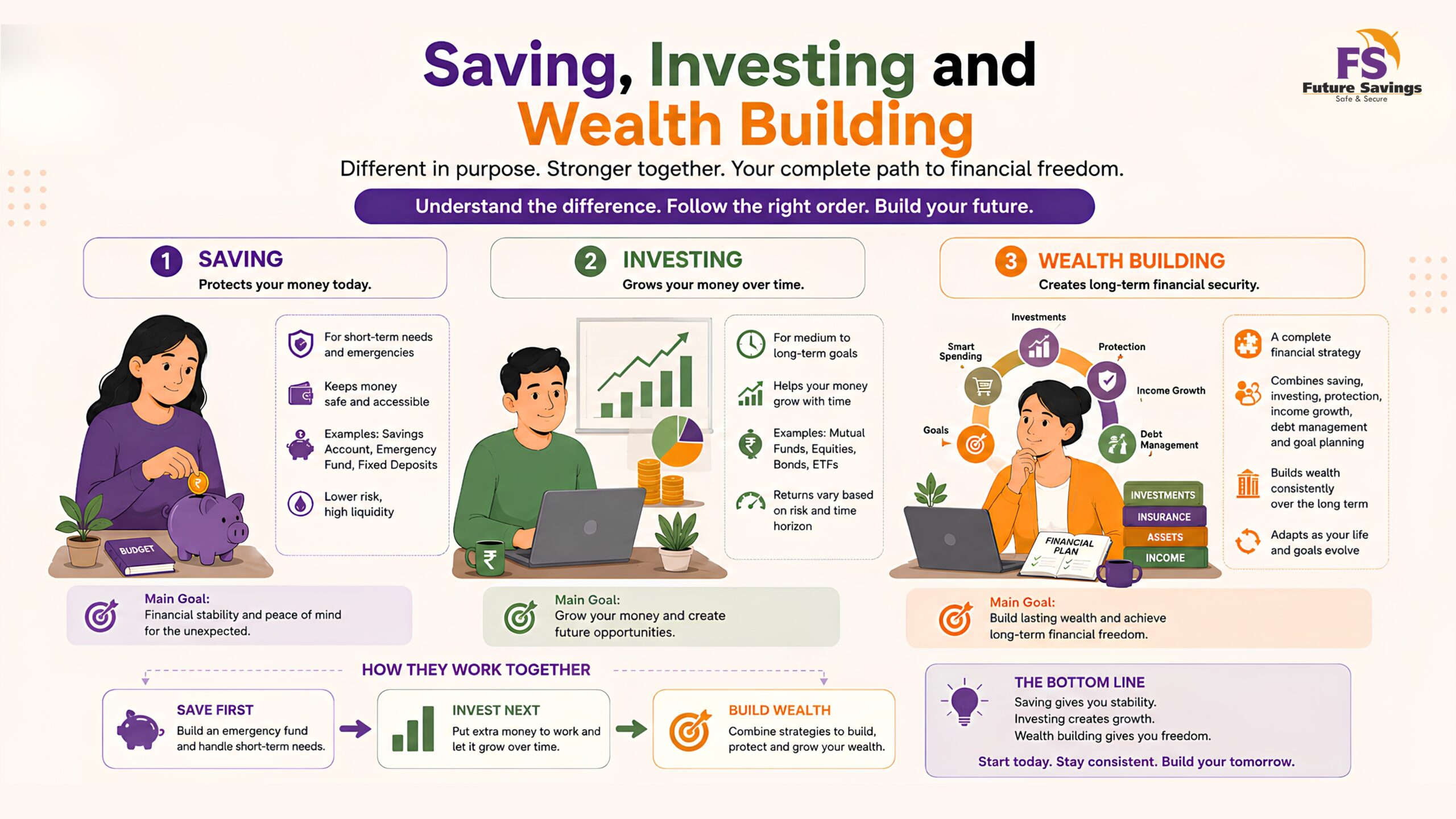
When it comes to managing money, three words often come up: saving, investing and wealth building. They are sometimes used interchangeably, but they actually serve very different purposes.
Saving can help you prepare for expenses and unexpected situations. Investing gives your money the potential to grow over time. Wealth building takes a bigger-picture approach by combining your income, savings, investments, protection and financial decisions to create long-term financial security.
Understanding the difference between the three can help you make better financial decisions at every stage of your life.
What is Saving?
Saving means setting aside a portion of your income for future use rather than spending it immediately.
Savings are generally meant for short-term needs, planned expenses and financial emergencies. This could include building an emergency fund, saving for a holiday, paying for an upcoming course or preparing for a major purchase.
The biggest advantage of saving is accessibility. You generally want money meant for immediate or unexpected needs to be available when you need it, rather than exposed to significant market fluctuations.
For example, if your monthly income is ₹50,000 and you regularly set aside ₹10,000, you are building savings that can provide a financial cushion.
Why Saving Matters
Saving provides the foundation for financial stability.
An emergency fund can help you manage unexpected expenses without immediately relying on loans or credit. Similarly, saving for known expenses can prevent you from disrupting your long-term investments when a large payment comes due.
However, keeping all your money in savings indefinitely may not be enough to build long-term wealth. Inflation can gradually reduce the purchasing power of money over time, which is why investing becomes an important part of a longer-term financial strategy.
What is Investing?
Investing means putting your money into assets with the expectation that they may generate returns or appreciate in value over time.
Depending on your goals, risk tolerance and investment horizon, investments may include mutual funds, equities, bonds and other investment products.
Unlike money kept aside for immediate expenses, invested money is generally intended to work towards longer-term financial goals. However, investments come with different levels of risk, and returns are not guaranteed. SEBI also highlights the importance of considering factors such as risk, diversification, asset allocation, investment horizon and financial goals when making investment decisions.
For example, someone saving for a goal that is many years away may consider investments that have greater potential for growth, provided they are comfortable with the associated risks.
Why Investing Matters
The purpose of investing is not simply to “make more money.” It is to give your money an opportunity to grow over time and potentially keep pace with or outpace inflation.
Compounding can also play an important role. When returns remain invested, future returns can potentially be generated on both the original investment and accumulated returns.
But investing should always be approached with an understanding of risk. For instance, mutual funds are not guaranteed-return products, and the value of investments can rise or fall depending on market conditions.
The right investment therefore depends on what you are investing for, how long you can stay invested and how much risk you can reasonably take.
What is Wealth Building?
Wealth building is the bigger picture. While saving and investing focus primarily on what you do with your money, wealth building looks at how different financial decisions work together over the long term.
It can involve:
- Maintaining healthy spending habits
- Building an emergency fund
- Investing consistently
- Diversifying investments and assets
- Protecting yourself and your family through appropriate insurance
- Planning for major life goals
- Reviewing your financial strategy as your circumstances change
In other words, wealth building is not about finding one investment that will make you rich. It is about creating a sustainable financial system that can grow with you.
How Saving, Investing & Wealth Building Work Together?
Step 1: Save for Stability
Start by understanding your monthly income and expenses. Create a budget and build an emergency fund that can help cover unexpected financial needs. This creates a foundation before you take on investment risk.
Step 2: Invest for Growth
Once you have a financial cushion, you can allocate money towards investments based on your goals, time horizon and risk tolerance. The objective is to give your money the opportunity to grow over the long term rather than leaving every rupee sitting idle.
Step 3: Build and Protect Wealth
As your income and investments grow, your financial strategy can become more comprehensive.
You may increase your investments, diversify your portfolio, manage debt, review your insurance coverage and plan for goals such as buying a home, funding education or preparing for retirement. This is where saving and investing become part of a broader wealth-building strategy.
A Simple Example

Consider someone who earns ₹50,000 a month.
At the beginning of their career, they may focus on controlling expenses and setting aside money every month. Their first priority could be building an emergency fund.
Once they have created a reasonable financial cushion, they could begin investing regularly towards long-term goals. As their income increases, they may increase their investments, diversify their portfolio, protect their income and assets through appropriate insurance, manage debt and review their financial goals periodically.
Over several years, these individual decisions can work together to create financial wealth.
The important point is that wealth is rarely built through one financial decision. Instead, it is usually the result of consistent decisions made over time.
Common Mistakes to Avoid
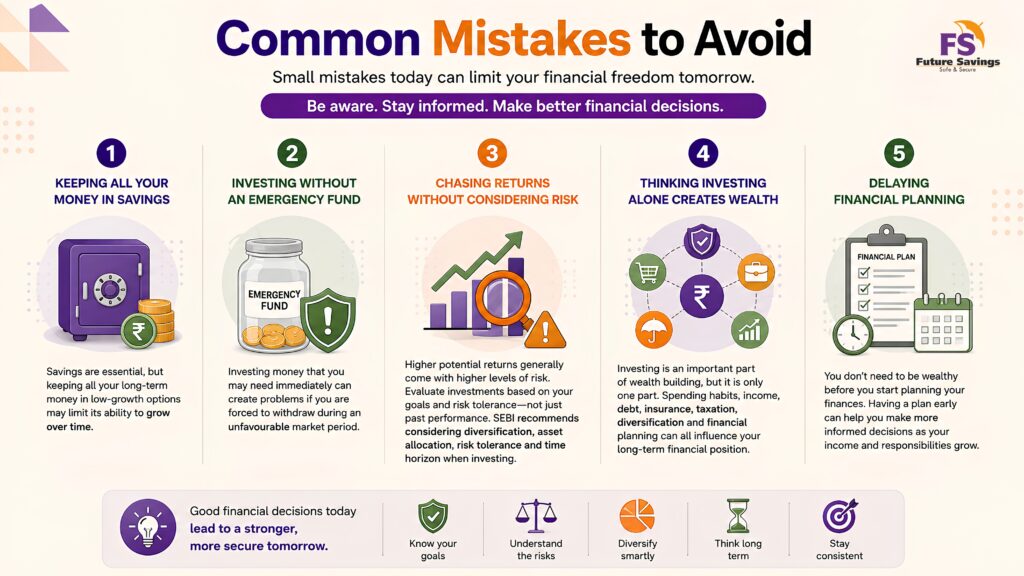
Keeping All Your Money in Savings
Savings are essential, but keeping all your long-term money in low-growth options may limit its ability to grow over time.
Investing Without an Emergency Fund
Investing money that you may need immediately can create problems if you are forced to withdraw during an unfavourable market period.
Chasing Returns Without Considering Risk
Higher potential returns generally come with higher levels of risk. An investment should be evaluated based on whether it is suitable for your goals and risk tolerance—not simply because it delivered strong returns in the past. SEBI specifically recommends considering diversification, asset allocation, risk tolerance and time horizon when investing.
Thinking Investing Alone Creates Wealth
Investing is an important part of wealth building, but it is only one part. Spending habits, income, debt, insurance, taxation, diversification and financial planning can all influence your long-term financial position.
Delaying Financial Planning
You don’t need to be wealthy before you start planning your finances. In fact, having a plan early can help you make more informed decisions as your income and responsibilities grow.
The Bottom Line: Don’t Choose One; Understand All Three
Saving, investing and wealth building aren’t three different paths. They are interconnected parts of a strong financial strategy.
Saving helps you prepare. Investing helps your money grow. Wealth building brings everything together for the future.
The right approach may look different for every individual because financial goals, income, responsibilities, time horizons and risk tolerance vary.
The goal isn’t simply to have more money sitting in your account. It is to create a financial strategy that helps you manage today’s needs while preparing for tomorrow’s goals.
Because financial success isn’t just about how much you earn; it’s also about what you do with what you earn, how consistently you do it and how well your decisions work together over time.
Disclaimer: This article is for educational and informational purposes only and should not be considered investment advice. Investment decisions should be made after considering individual financial goals, risk tolerance, investment horizon and applicable risks. Past performance does not guarantee future returns. Please consult a qualified financial professional before making investment decisions.
 Post Tags: