


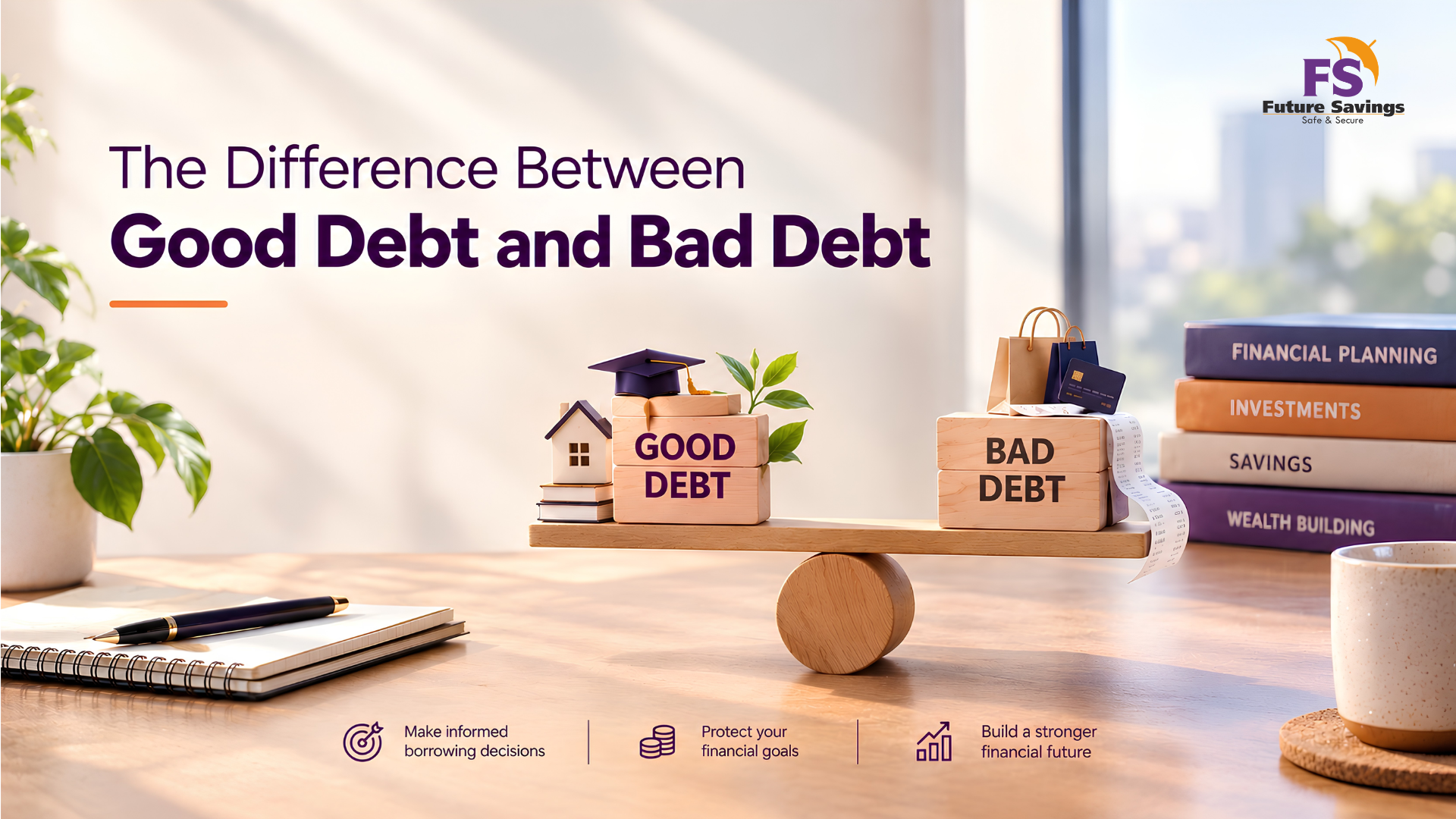
Debt is often viewed as something to avoid. But not all debt has the same impact on your financial life. The difference lies in why you borrow, how much you borrow, and whether the debt supports or affects your financial goals.
Some forms of debt can help you build assets, improve your financial position, or manage important expenses. Others can become a financial burden when they are used for unnecessary spending or are difficult to repay.
Understanding the difference between good debt and bad debt can help you make more informed borrowing decisions.
What Is Good Debt?
Good debt is generally borrowing that has a clear purpose and can potentially contribute to your long-term financial well-being.
For example, an education loan may help you gain qualifications that improve your career opportunities. A home loan can help you purchase an asset while spreading the cost over several years. Similarly, a business loan may provide the funds needed to expand a business or invest in equipment.
The key is not simply the type of loan, but whether the borrowing is manageable and aligned with your financial goals.
What Is Bad Debt?
Bad debt is usually associated with borrowing for expenses that do not add long-term financial value, particularly when the debt carries high interest or encourages spending beyond your means.
Credit card debt accumulated from unnecessary purchases is one common example. Similarly, repeatedly using loans or Buy Now, Pay Later facilities for lifestyle spending can create repayment obligations that become difficult to manage.
A purchase may feel affordable because the payment is divided into smaller amounts, but multiple repayments can quickly add up and put pressure on your monthly budget.
Good Debt Can Become Bad Debt
A loan is not automatically “good” simply because it is used for an asset or investment.
Even a home loan or education loan can become a financial strain if the borrowing is too large compared to your income. High EMIs, long repayment periods, or rising financial commitments can affect your ability to save and invest.
This is why affordability matters as much as the purpose of the loan.
Before taking on debt, consider your income, existing commitments, interest rate, repayment period, and how the EMI will fit into your monthly budget.
How Debt Can Affect Your Financial Goals
Debt does not only affect your current expenses. It can also influence your ability to work towards future goals.
If a large portion of your income goes towards EMIs and interest payments, you may have less money available for:
- Building an emergency fund
- Saving for important goals
- Investing for long-term growth
- Maintaining adequate insurance protection
- Planning for retirement
Managing debt effectively can therefore create more room for saving, investing, and building long-term financial security.
Ask These Questions Before Taking A Loan
Before borrowing money, take a moment to ask yourself:
1. Why am I borrowing?
Is it for an essential expense, an asset, education, business, or simply something I want right now?
2. Can I comfortably afford the repayment?
Look beyond today’s income and consider your other monthly commitments.
3. What will the debt actually cost me?
Check the interest rate, processing fees, tenure, and total repayment amount.
4. Will this debt support my financial goals?
Consider whether the borrowing helps you move forward or delays your savings and investment plans.
5. What happens if my income changes?
Make sure you have enough financial flexibility to continue repayments during unexpected situations.
The Bottom Line
Debt itself is not necessarily good or bad. The way you use and manage it makes the difference.
Borrowing for a purpose that supports your long-term financial goals, while keeping repayments within your means, can be a useful financial tool. On the other hand, borrowing for unnecessary spending or taking on more debt than you can comfortably repay can create financial pressure.
Before taking a loan, look beyond the immediate benefit. Understand the cost, consider its impact on your savings and investments, and make sure the repayment fits into your overall financial plan.
Good financial planning is not about avoiding every loan. It is about knowing when borrowing makes sense — and when it doesn’t.
 Post Tags: