


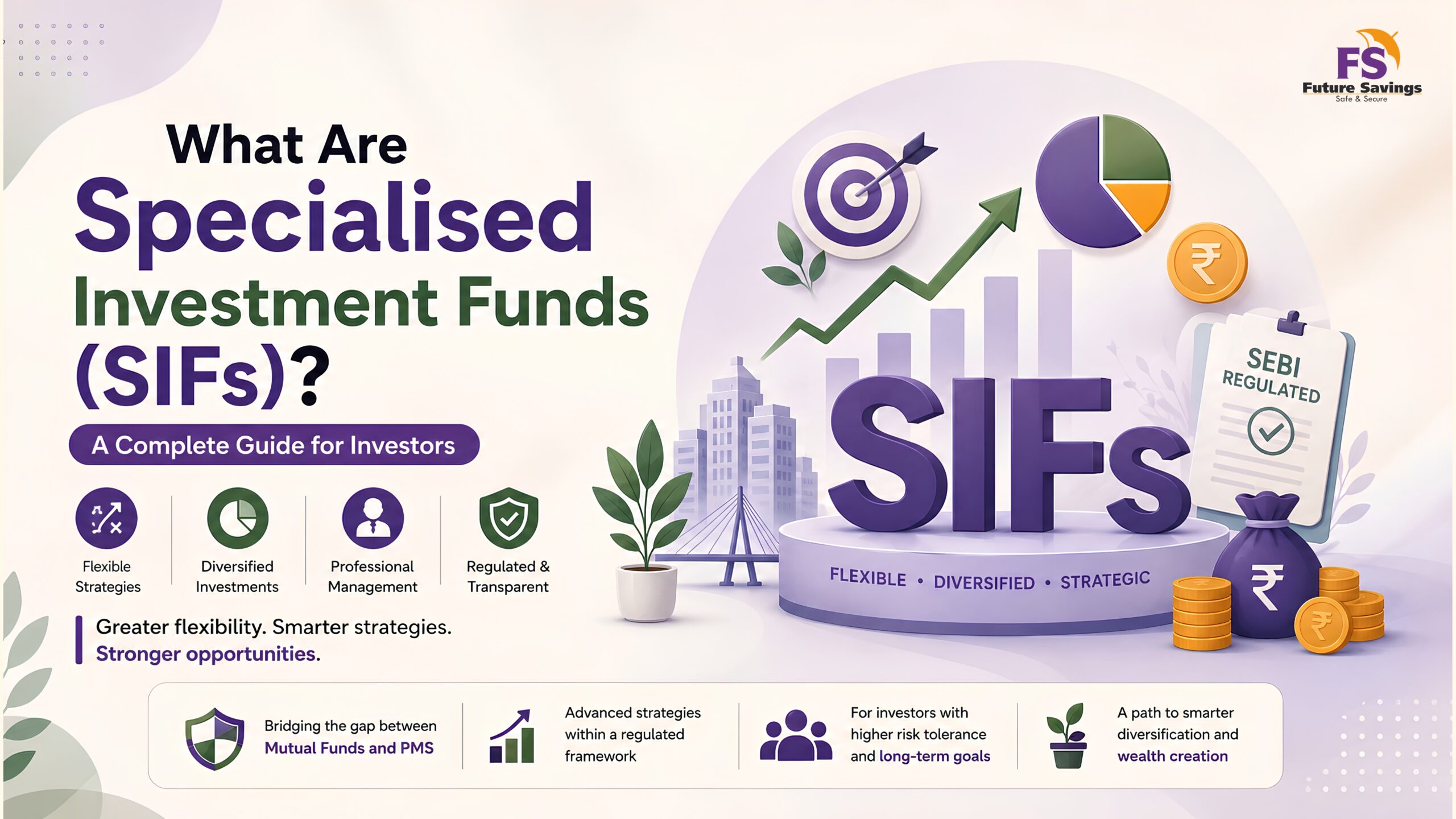
SIFs are designed for investors who are looking for greater flexibility in investment strategies while continuing to benefit from the transparency and regulatory oversight associated with mutual funds. But what exactly are Specialised Investment Funds, and who should consider investing in them? Let’s find out.
What Is a Specialised Investment Fund (SIF)?
A Specialised Investment Fund (SIF) is a SEBI-regulated investment product that allows fund managers greater flexibility in constructing portfolios than conventional mutual funds. Unlike regular mutual funds that follow stricter investment guidelines, SIFs can adopt more dynamic strategies to pursue investment opportunities across various market conditions.
This category is intended for investors who have a higher risk appetite and are comfortable investing a larger amount in exchange for access to more sophisticated investment strategies.
Why Were SIFs Introduced?
Traditional mutual funds are suitable for a wide range of investors but operate within defined investment limits. On the other hand, Portfolio Management Services (PMS) offer personalised investment management but require a significantly higher minimum investment.
Specialised Investment Funds help bridge this gap by offering:
- More flexible investment strategies than mutual funds
- Lower investment requirements than PMS
- Professional fund management within a regulated framework
This provides investors with an additional option that balances accessibility with advanced portfolio management.
Key Features of SIFs
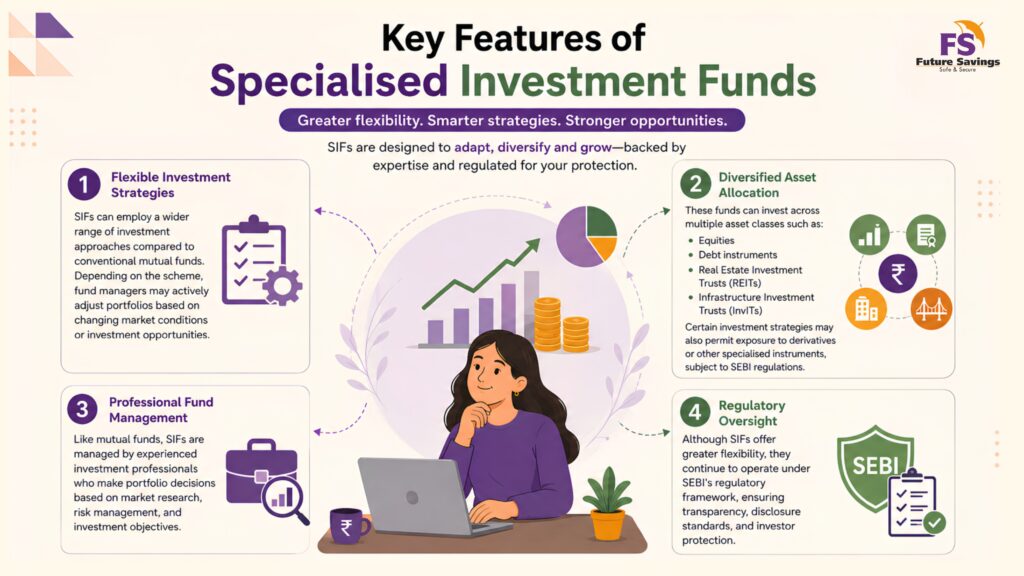
1. Flexible Investment Strategies
SIFs can employ a wider range of investment approaches compared to conventional mutual funds. Depending on the scheme, fund managers may actively adjust portfolios based on changing market conditions or investment opportunities.
2. Diversified Asset Allocation
These funds can invest across multiple asset classes such as:
- Equities
- Debt instruments
- Real Estate Investment Trusts (REITs)
- Infrastructure Investment Trusts (InvITs)
Certain investment strategies may also permit exposure to derivatives or other specialised instruments, subject to SEBI regulations.
3. Professional Fund Management
Like mutual funds, SIFs are managed by experienced investment professionals who make portfolio decisions based on market research, risk management, and investment objectives.
4. Regulatory Oversight
Although SIFs offer greater flexibility, they continue to operate under SEBI’s regulatory framework, ensuring transparency, disclosure standards, and investor protection.
Types of Specialised Investment Funds
Depending on their investment objectives, SIFs may broadly fall into the following categories:
Equity-Oriented SIFs
These primarily invest in equity and equity-related instruments and may use specialised strategies to generate returns.
Debt-Oriented SIFs
Focused mainly on fixed-income securities, these funds aim to optimise returns while managing interest rate and credit risks.
Hybrid SIFs
Hybrid SIFs combine equity, debt, and other eligible asset classes to create diversified portfolios that can adapt to different market environments.
Who Can Invest in SIFs?
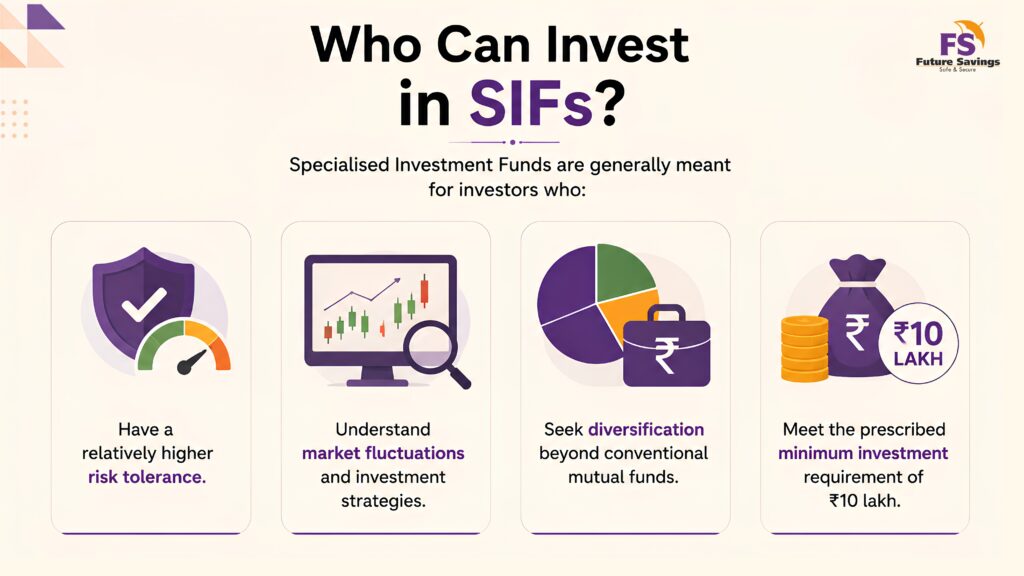
Specialised Investment Funds are generally meant for investors who:
- Have a relatively higher risk tolerance.
- Understand market fluctuations and investment strategies.
- Seek diversification beyond conventional mutual funds.
- Meet the prescribed minimum investment requirement of ₹10 lakhs.
Since these funds may employ more complex investment strategies, investors should carefully assess whether the product aligns with their financial goals and risk profile.
Benefits of Investing in SIFs
Some potential advantages include:
- Greater portfolio flexibility
- Access to advanced investment strategies
- Diversification across multiple asset classes
- Professional management
- SEBI-regulated investment framework
- An investment option positioned between mutual funds and PMS
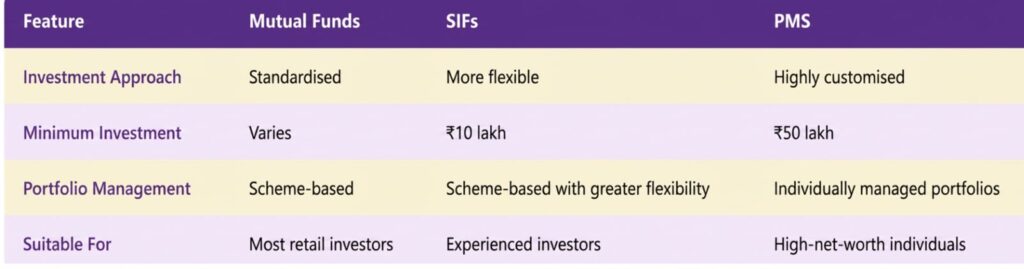
Mutual Funds vs SIFs vs PMS
Things To Consider Before Investing
Before investing in a Specialised Investment Fund, investors should evaluate:
- Their financial goals
- Investment horizon
- Risk tolerance
- Liquidity requirements
- The fund’s investment strategy and objective
Reading the Scheme Information Document (SID) and understanding the associated risks is always recommended before making an investment decision.
Final Thoughts
Specialised Investment Funds represent a new investment avenue for individuals seeking more sophisticated portfolio strategies without the higher entry barriers associated with Portfolio Management Services. By combining regulatory oversight with greater investment flexibility, SIFs offer an additional choice for investors looking to diversify beyond traditional mutual funds.
As with any investment, the suitability of an SIF depends on your financial objectives, investment experience, and ability to manage market risk. Consulting a financial advisor before investing can help determine whether this category aligns with your long-term wealth creation goals.
 Post Tags: