



It is easy to focus on the immediate things you want to spend your salary on — eating out, shopping, travelling, upgrading your phone or simply enjoying the freedom of having your own income. There is nothing wrong with enjoying the money you earn. But if your entire salary disappears by the end of every month, you could be missing an opportunity to build a stronger financial future.
Your salary is not just money to spend. It can be the starting point for financial planning, investing, saving money and building long-term wealth.
Whether you have just started working or have already been earning for a few years, developing the right money habits early can make it easier to manage your finances, handle unexpected expenses and work towards financial independence.
Your First Salary is More Than Spending Money
When you receive your first salary, it can be tempting to think of it as the amount available to spend each month. A better approach is to divide your income according to different priorities, such as everyday expenses, saving money, investments and future financial goals.
This is where salary management becomes important. Managing your salary does not mean avoiding everything you enjoy. It means understanding where your money is going and making sure your spending does not come at the expense of your future.
Building wealth does not necessarily require a very high income. What matters is how consistently you save and invest a portion of what you earn. Starting with manageable amounts and increasing them as your income grows can help you gradually build long-term wealth.
Your financial strategy should grow with you. As your income, responsibilities and goals change, your approach to saving and investment planning can change as well.
Save Before You Spend
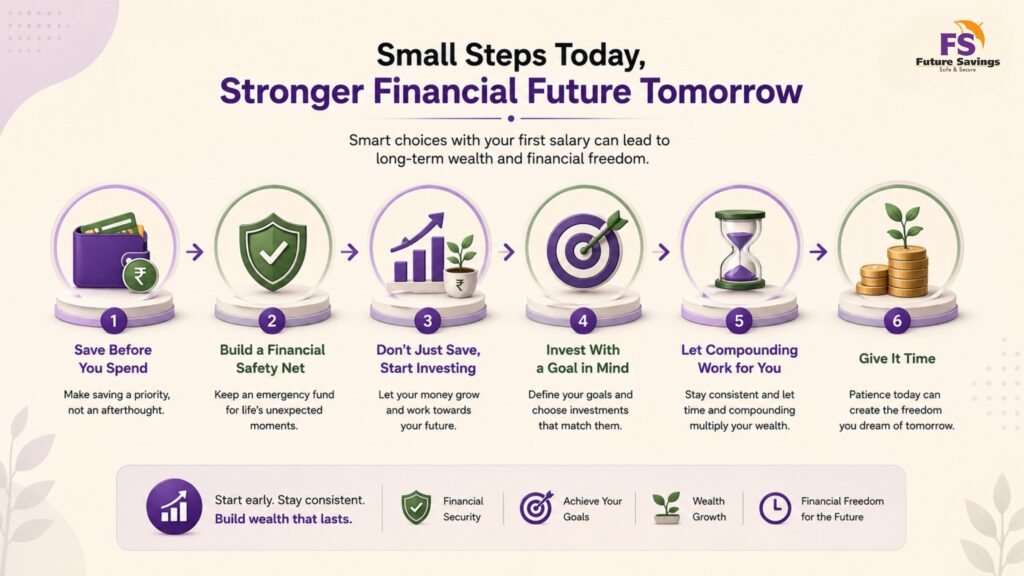
The simplest financial habit you can develop from your first salary is to save before you start spending. Instead of paying all your expenses and saving whatever happens to be left at the end of the month, decide how much you want to save or invest when your salary comes in.
This does not mean you have to save an unrealistic portion of your income. Start with an amount that is comfortable for your current situation and increase it as your income grows. The goal is to make saving money a regular part of your financial routine rather than something you do only when you have extra cash.
You can also automate your savings or investments shortly after receiving your salary. This reduces the temptation to spend first and save later.
Build a Financial Safety Net
Before focusing entirely on long-term investments, make sure you have money available for unexpected situations.
An emergency fund can help you manage expenses such as a sudden loss of income, medical needs, urgent travel or other unforeseen costs without having to rely heavily on credit or disturb your long-term investments.
Keep in mind that emergency savings and investments serve different purposes. Money you may need in the near future should generally remain easily accessible, while money intended for longer-term goals can be invested according to your goals, investment horizon and risk profile.
Having this financial safety net is an important part of financial planning. It can also give you greater confidence when making longer-term investment decisions.
Don’t Just Save – Start Investing
Saving helps you set money aside. Investing gives that money the potential to grow over time. For long-term goals, simply keeping all your savings in a bank account may not be enough to protect your purchasing power from inflation. Investing can provide an opportunity for your money to grow, although all investments carry some level of risk and returns are not guaranteed.
For young investors, starting early can be particularly valuable because they may have a longer investment horizon. A longer time horizon can provide more time to experience the ups and downs of the market and allow investments to potentially grow over time.
However, starting early does not mean taking unnecessary risks. Your investments should match your financial goals, risk tolerance and investment horizon.
Let Compounding Work In Your Favour
One of the biggest advantages of early investing is time. When an investment generates returns and those returns remain invested, they can potentially generate further returns over time. This is the basic principle of compounding.
The longer your money remains invested, the more opportunity compounding has to work. This is one reason why starting with a manageable amount from your first salary can be more useful than waiting until you earn a much higher income.
You do not necessarily need a large amount to begin. Consistent investing over a longer period can allow you to gradually build your investment corpus.
For someone beginning their career, early investing can therefore become an important part of a long-term wealth-building strategy.
Invest With a Goal In Mind
Investing simply because everyone around you is investing may not be enough. Before choosing an investment, think about what you are investing for and when you may need the money.
Your financial goals could include building a corpus for higher education, planning a wedding, buying a home, travelling, starting a business or working towards financial independence. Different goals can have different timelines and risk requirements. Understanding your investment horizon can help you make more suitable investment decisions.
This is where investment planning becomes useful. Instead of asking only, “What investment will give me the highest return?”, start asking, “What investment approach makes sense for my goal?”
A goal-based approach can help you make investment decisions based on your actual financial needs rather than short-term market trends.
SIPs Can Help You Build Consistency
If you are new to investing, putting a large amount into the market at once may feel overwhelming.
A Systematic Investment Plan (SIP) allows you to invest a fixed amount at regular intervals in a mutual fund. For many young investors, this can make investing easier to incorporate into their monthly financial routine. SIPs can also encourage consistency. Rather than waiting for the “perfect” time to invest, investing regularly can help you develop a disciplined investment habit.
Mutual funds offer access to professionally managed portfolios, making them one of the investment options that investors may consider as part of their overall investment planning. However, mutual fund investments are subject to market risks, and a SIP does not guarantee profits or protect against losses.
The right investment should always depend on your financial goals, risk profile and investment horizon.
Don’t Let Your Lifestyle Grow Faster Than Your Income
Getting a salary hike is exciting. So is getting a better job, a bonus or a new source of income. But there is a common trap that can come with earning more: increasing your lifestyle every time your income increases.
A bigger salary can quickly turn into a more expensive phone, more subscriptions, frequent dining out, bigger purchases and higher monthly commitments. There is nothing wrong with improving your lifestyle. The important thing is to make sure your savings and investments increase alongside it.
When your income grows, consider directing at least part of the increase towards your financial goals instead of allowing your expenses to automatically absorb it.
This approach can help you balance enjoying your current income with building long-term wealth.
Start Small, But Start Early
Building long-term wealth does not require you to have everything figured out from your first paycheque. What matters is getting started.
Save consistently. Build an emergency fund. Invest according to your goals and risk profile. Consider options such as SIPs and mutual funds where they are appropriate for your financial situation. Avoid unnecessary debt and lifestyle inflation. And most importantly, give your money time to grow.
Your first salary may not make you wealthy overnight. But the financial habits you develop with it can influence the kind of financial future you create. From salary management and saving money to early investing, compounding and investment planning, the decisions you make today can shape your financial journey over time.
The earlier you start making intentional decisions with your money, the more time you give yourself to work towards financial independence and long-term wealth.
Your first salary is not the finish line. It is the beginning of your financial journey.
Disclaimer: Mutual fund investments are subject to market risks. Read all scheme-related documents carefully before investing. The information provided in this article is for educational purposes only and should not be considered financial or investment advice. Investors should evaluate their individual financial goals and consult a qualified financial advisor before making investment decisions.