


Table of Contents
- What is Inflation?
- Why Inflation Matters
- How Inflation Reduces Purchasing Power
- The Hidden Cost of Keeping Money Idle
- Inflation and Traditional Savings
- Real Return vs Nominal Return
- Why Salaried Individuals Should Care
- Ways to Protect Your Wealth from Inflation
- Inflation Impact Example
- Conclusion
- Frequently Asked Questions
What is Inflation?
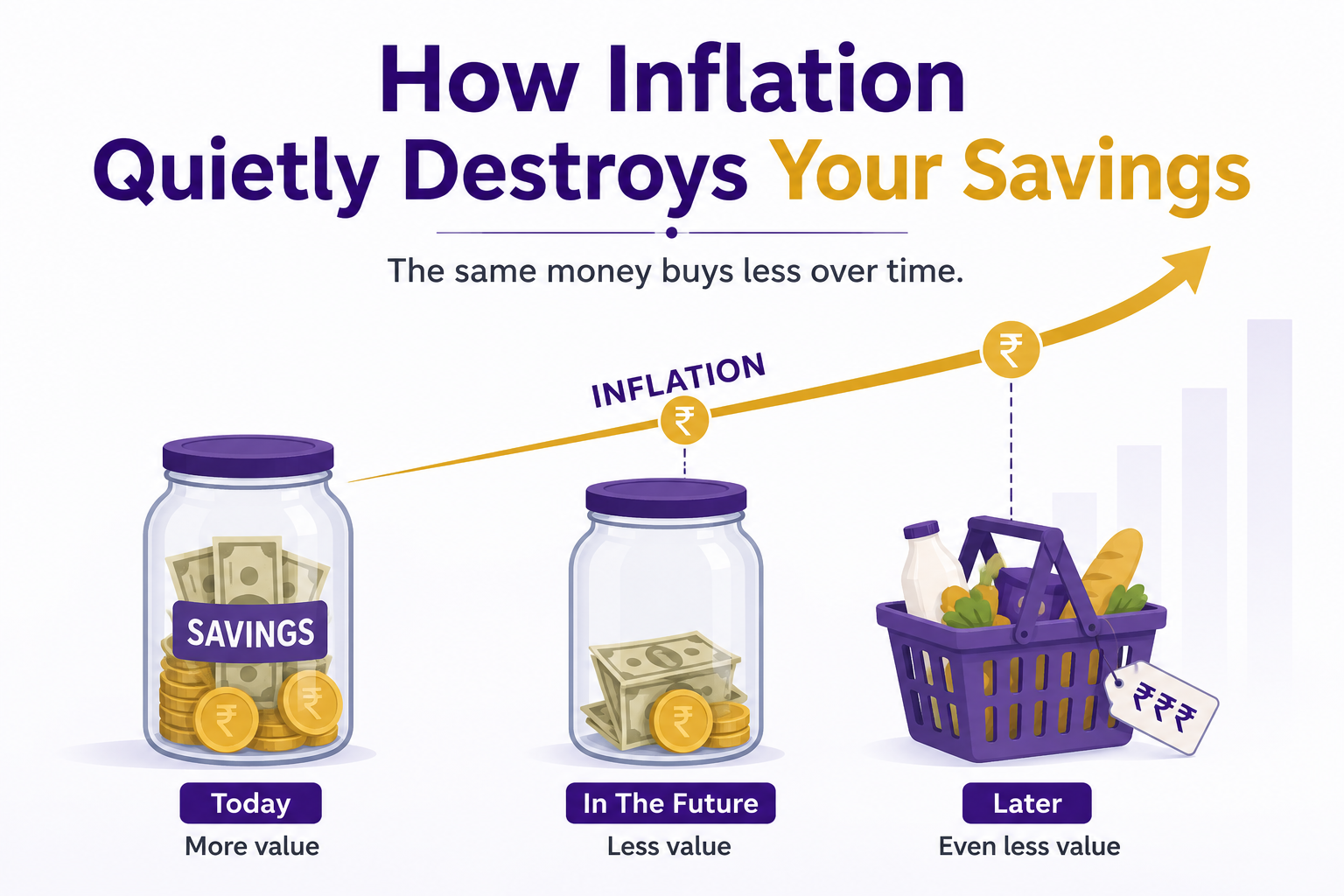
Inflation refers to the gradual increase in the prices of goods and services over time. As prices rise, the purchasing power of money declines.
Simply put, the amount of money that buys a product today may not be enough to buy the same product several years later.
Inflation is a normal part of every economy, but ignoring it can significantly affect long-term financial goals.
Why Inflation Matters
Many people focus only on saving money and overlook how inflation affects those savings.
Even when your bank balance remains the same, inflation can reduce the actual value of your money because everyday expenses continue to rise.
This is why financial planning should focus not only on saving but also on growing wealth.
How Inflation Reduces Purchasing Power
Purchasing power refers to how much goods and services your money can buy.
As inflation increases, the same amount of money buys fewer items.
For example, a product that costs ₹100 today may cost ₹130 or more in the future. If your money does not grow at a similar pace, your purchasing power declines.
The Hidden Cost of Keeping Money Idle
Many individuals keep a large portion of their savings in low-growth accounts because they feel safe.
While safety is important, money that remains idle for long periods may struggle to keep pace with inflation.
Over time, the gap between rising expenses and slow-growing savings can become significant.
Inflation and Traditional Savings
Traditional savings options provide stability and liquidity, but their returns may not always exceed inflation.
If inflation remains close to the return earned on savings, the real growth of wealth becomes very limited.
This is one reason many investors look for long-term investment options that have the potential to generate higher returns.
Real Return vs Nominal Return
Many investors focus on the return shown on an investment statement. This is known as the nominal return.
However, the more important figure is the real return, which considers inflation.
| Item | Example |
|---|---|
| Investment Return | 8% |
| Inflation Rate | 6% |
| Approximate Real Return | 2% |
This example shows why inflation should always be considered when evaluating investment performance.
Why Salaried Individuals Should Care
Salaried professionals are particularly vulnerable to inflation because living expenses often rise faster than expected.
Common expenses affected by inflation include:
- Food and groceries
- Housing costs
- Healthcare expenses
- Education costs
- Transportation expenses
If income growth does not keep pace with inflation, maintaining the same lifestyle can become increasingly difficult.
Ways to Protect Your Wealth from Inflation
While inflation cannot be avoided, investors can take steps to reduce its impact.
Strategies to Consider
- Invest regularly through SIPs
- Focus on long-term wealth creation
- Diversify investments
- Review financial goals periodically
- Increase investments as income grows
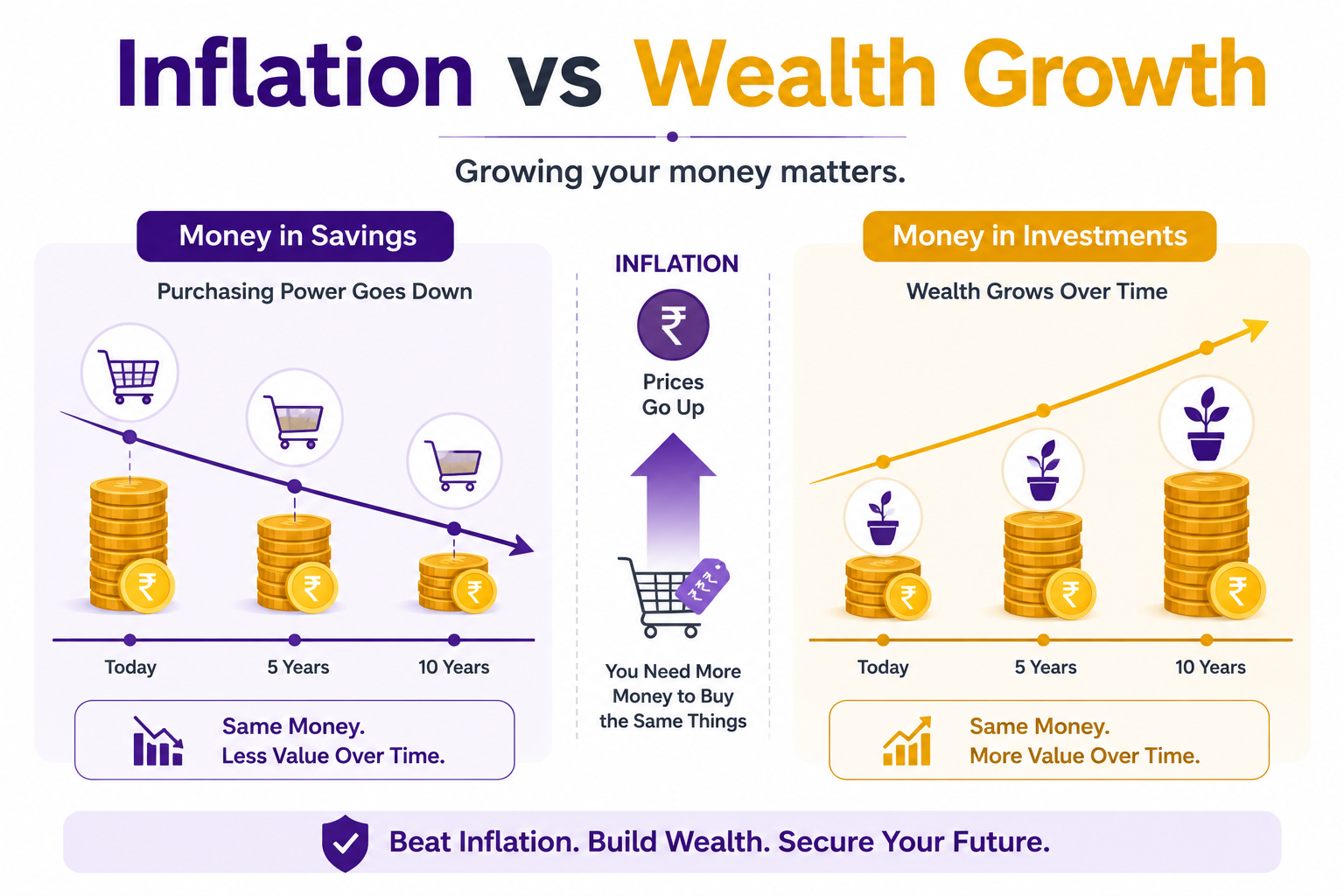
The objective is to ensure that wealth grows faster than the rate at which purchasing power declines.
Inflation Impact Example
The following example illustrates how inflation can affect purchasing power over time.
| Current Cost | Years Later | Future Cost (Illustrative) |
|---|---|---|
| ₹1,00,000 | 10 Years | Significantly Higher |
This demonstrates why simply saving money may not be enough to achieve future financial goals.
Conclusion
Inflation is one of the biggest long-term threats to wealth because it gradually reduces the purchasing power of money.
While saving remains important, growing your money is equally important if you want to maintain your future lifestyle and achieve financial goals.
Understanding inflation and planning investments accordingly can help protect your wealth and improve long-term financial security.
Frequently Asked Questions
1. What is inflation in simple terms?
Inflation is the gradual increase in prices over time, which reduces the purchasing power of money.
2. Why is inflation important for investors?
Inflation affects the real value of investment returns and long-term wealth creation.
3. Can savings accounts beat inflation?
Not always. In some periods, inflation may grow faster than savings account returns.
4. Why should salaried individuals worry about inflation?
Because everyday expenses often increase over time, reducing future purchasing power.
5. How can investors protect themselves from inflation?
Long-term investing, diversification, and disciplined investing strategies can help reduce inflation’s impact on wealth.
 Post Tags:
Leave A Comment