


Table of Contents
- Why Your 30s Are Important for Retirement Planning
- How Much Retirement Corpus Do You Need?
- Benefits of Starting Retirement Planning Early
- Build a Retirement Investment Strategy
- The Role of SIPs in Retirement Planning
- Protect Your Family with Insurance
- Common Retirement Planning Mistakes
- Sample Retirement Wealth Projection
- When Should You Seek Professional Advice?
- Conclusion
- Frequently Asked Questions
Why Your 30s Are Important for Retirement Planning
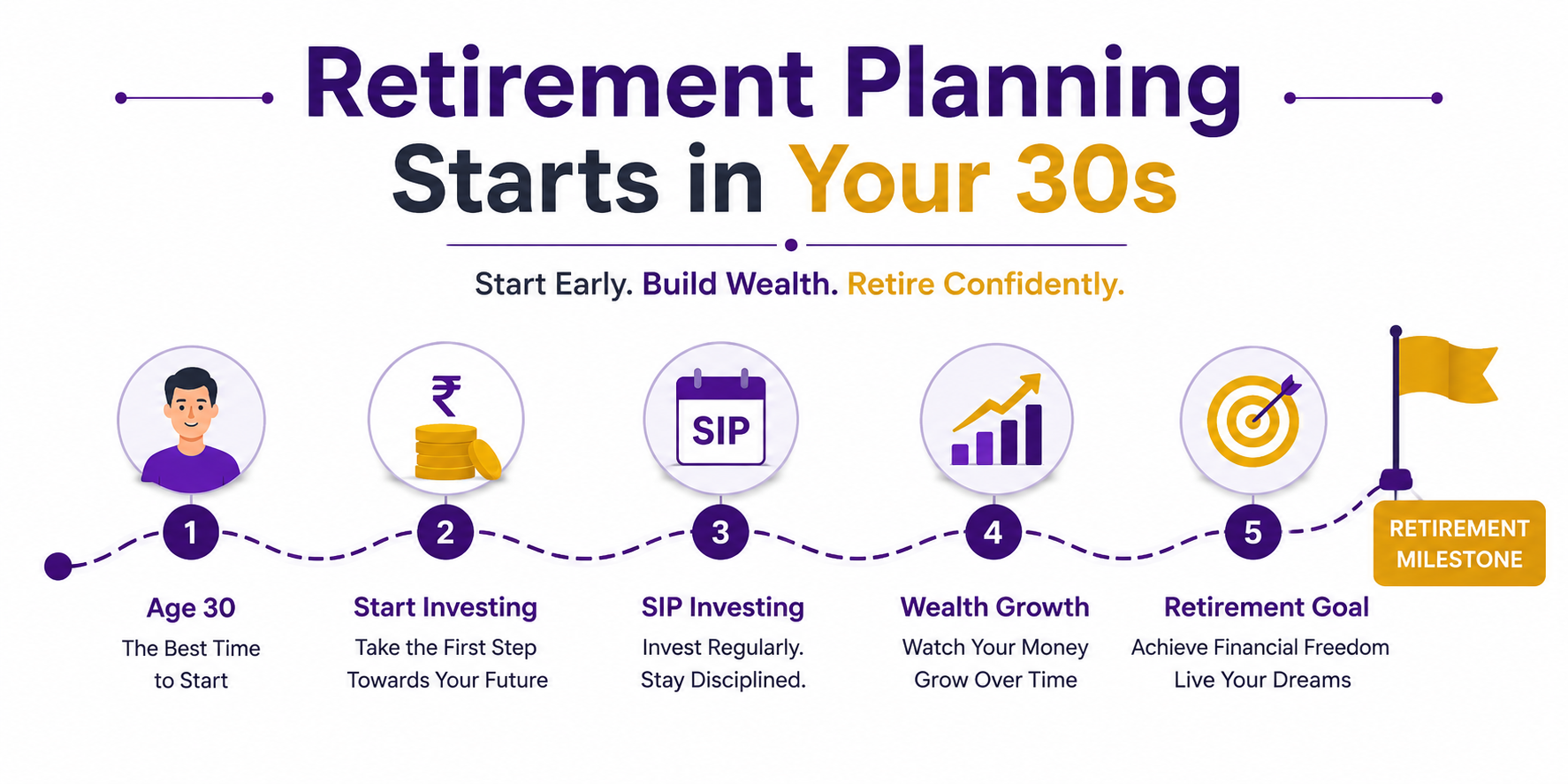
Your 30s are one of the most important decades for building long-term financial security. While many professionals focus on career growth, buying a home, or raising a family, retirement planning often gets postponed. The advantage of starting retirement planning in your 30s is time. The longer your investment horizon, the more your money can benefit from compounding and market growth. Even relatively small monthly investments can potentially grow into a substantial retirement corpus when invested consistently over several decades.
How Much Retirement Corpus Do You Need?
Retirement planning begins with estimating the amount of money you may require after you stop working. Several factors influence your retirement corpus requirement:
- Current lifestyle expenses
- Expected retirement age
- Life expectancy
- Inflation
- Healthcare expenses
- Future financial responsibilities
A larger retirement period generally requires a larger retirement corpus to maintain financial independence.
Benefits of Starting Retirement Planning Early
Starting retirement planning early offers several advantages that can significantly improve long-term outcomes.
Advantages of Early Planning
- Longer compounding period
- Lower monthly investment requirement
- Greater wealth accumulation potential
- More flexibility during market fluctuations
- Reduced financial pressure later in life
Time is often more valuable than the amount invested when it comes to building retirement wealth.
Build a Retirement Investment Strategy
A successful retirement plan usually combines growth-oriented investments with disciplined long-term investing.
| Investment Option | Purpose |
|---|---|
| Equity Mutual Funds | Long-term wealth creation |
| Index Funds | Low-cost market participation |
| Hybrid Funds | Balanced growth and stability |
| Debt Investments | Portfolio stability |
The ideal investment mix depends on your goals, risk profile, and retirement timeline.
The Role of SIPs in Retirement Planning
Systematic Investment Plans (SIPs) are one of the most effective tools for building retirement wealth over time. SIPs encourage disciplined investing and help investors stay committed to long-term goals regardless of short-term market fluctuations.
Benefits of Retirement SIPs
- Disciplined investing
- Power of compounding
- Rupee cost averaging
- Flexibility to increase contributions
- Potential for long-term wealth creation
Protect Your Family with Insurance
Retirement planning is not only about investing. Protecting your financial foundation is equally important. Before aggressively investing for retirement, consider securing:
- Health Insurance
- Term Life Insurance
- Emergency Fund
Unexpected financial events can disrupt retirement goals if proper protection is not in place.
Common Retirement Planning Mistakes
Many investors delay retirement planning and lose valuable years of compounding.
Common Mistakes
- Starting too late
- Ignoring inflation
- Not increasing investments as income grows
- Depending only on savings accounts or Fixed Deposits
- Ignoring insurance protection
- Stopping SIPs frequently
- Investing without a retirement target
Avoiding these mistakes can significantly improve retirement outcomes.
Sample Retirement Wealth Projection
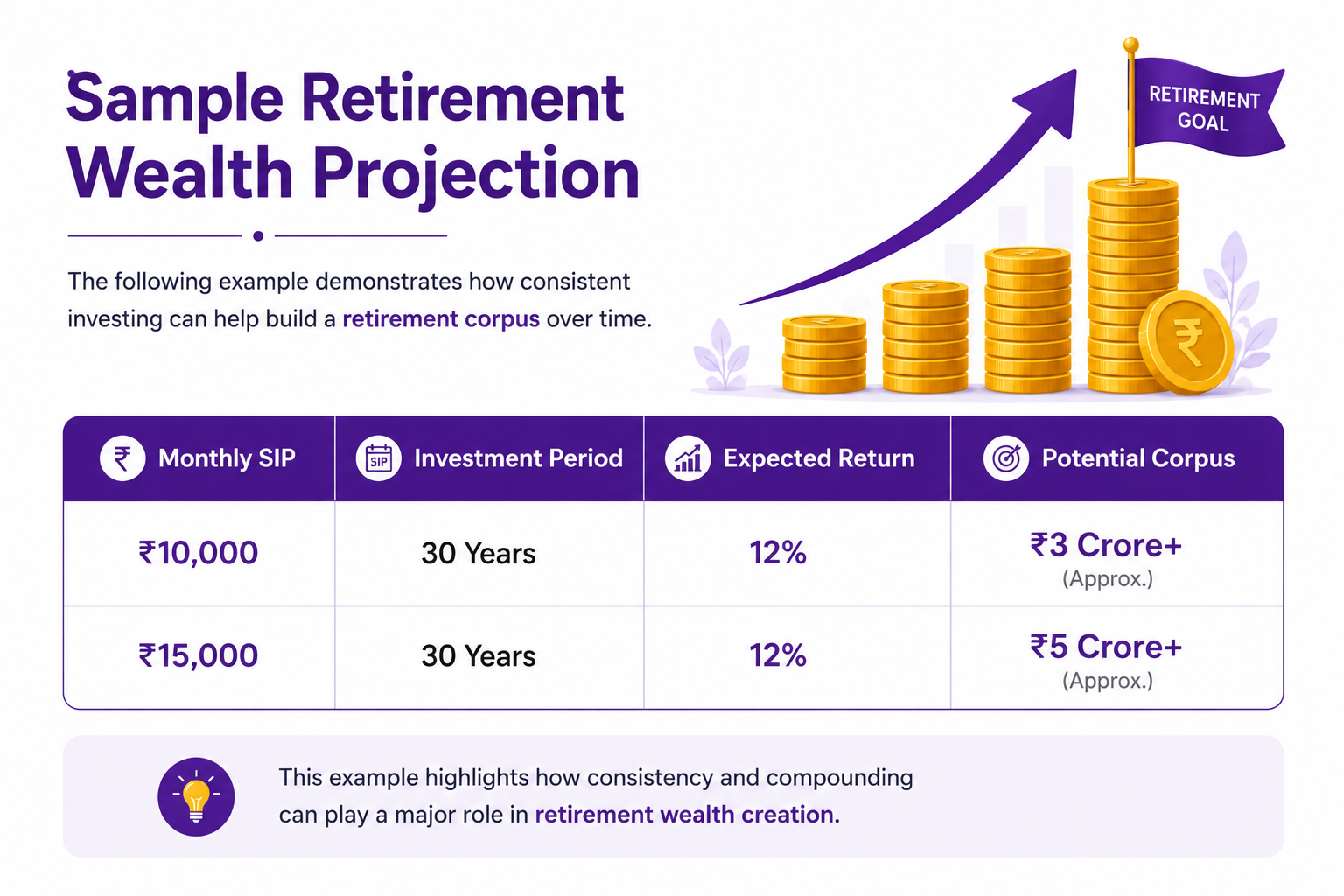
The following example demonstrates how consistent investing can help build a retirement corpus over time.
| Monthly SIP | Investment Period | Expected Return | Potential Corpus |
|---|---|---|---|
| ₹10,000 | 30 Years | 12% | ₹3 Crore+ (Approx.) |
| ₹15,000 | 30 Years | 12% | ₹5 Crore+ (Approx.) |
This example highlights how consistency and compounding can play a major role in retirement wealth creation.
When Should You Seek Professional Advice?
Retirement planning becomes more complex as income, investments, and responsibilities grow. A financial advisor can help with:
- Retirement corpus estimation
- Investment allocation
- SIP planning
- Risk management
- Insurance planning
- Long-term wealth creation strategies
Professional guidance can help ensure your retirement strategy remains aligned with your goals.
Conclusion
Retirement planning in your 30s can provide a significant advantage because of the power of time and compounding. By starting early, investing consistently through SIPs, protecting your family with insurance, and focusing on long-term goals, you can work toward building a retirement corpus that supports financial independence in the future.
Frequently Asked Questions
1. Is 30 too late to start retirement planning?
No. Starting in your 30s still provides several decades for investments to compound and grow.
2. How much should I invest for retirement?
The amount depends on your retirement goals, retirement age, expected lifestyle, and target retirement corpus.
3. Are SIPs suitable for retirement planning?
Yes. SIPs provide a disciplined approach to long-term wealth creation and retirement investing.
4. Why is inflation important in retirement planning?
Inflation reduces purchasing power over time, making it important to build a larger retirement corpus.
5. Should insurance be part of retirement planning?
Yes. Health insurance, term insurance, and an emergency fund help protect your long-term financial goals.
 Post Tags:
Leave A Comment