



Table of Contents
- What Is a Weekly Market Review?
- Why Does the Stock Market Move Up and Down?
- Understanding FII and DII Activity
- How FII Inflows Impact the Market
- How DII Inflows Support the Market
- Key Factors That Influence Market Movements
- Weekly Market Snapshot Example
- What Should Investors Do During Market Volatility?
- Important Lessons for Long-Term Investors
- Conclusion
- Frequently Asked Questions
What Is a Weekly Market Review?
A weekly market review helps investors understand what happened in the stock market during the week and why markets moved higher or lower. Instead of focusing on daily price fluctuations, investors can use weekly updates to identify broader trends, understand investor sentiment, and make informed investment decisions. For beginners and long-term investors alike, a weekly market review provides valuable context behind market movements.Why Does the Stock Market Move Up and Down?
Stock markets react to various economic, financial, and global developments. When investors are optimistic about economic growth and corporate performance, markets generally rise. When uncertainty increases, markets may decline.Common Factors That Move Markets
- Inflation data
- Interest rate decisions
- Corporate earnings results
- Government policy announcements
- Global economic events
- Foreign and domestic investment flows
Understanding FII and DII Activity
One of the most important indicators discussed in weekly market updates is FII and DII activity.What Are FIIs?
Foreign Institutional Investors (FIIs) are overseas investors such as global mutual funds, pension funds, and international investment firms that invest in Indian markets.What Are DIIs?
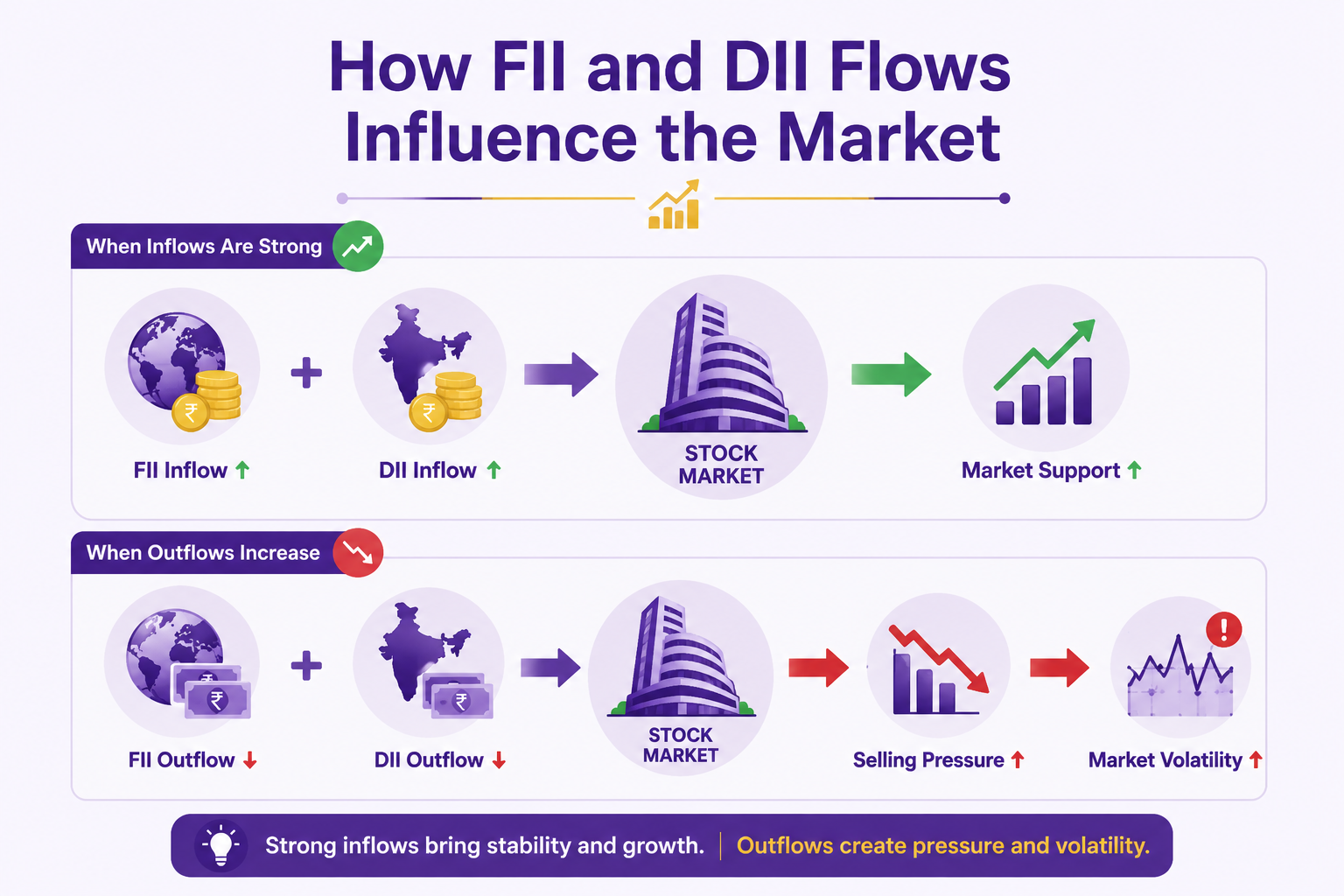
Domestic Institutional Investors (DIIs) are Indian institutions such as mutual funds, insurance companies, banks, and pension funds that invest in domestic markets. Both FIIs and DIIs influence market direction through their buying and selling activity.How FII Inflows Impact the Market
FII activity often plays a significant role in short-term market movements.When FIIs Buy
- Market liquidity increases
- Investor confidence improves
- Stock prices may rise
- Market sentiment becomes positive
When FIIs Sell
- Markets may experience corrections
- Volatility can increase
- Short-term sentiment may weaken
How DII Inflows Support the Market
DIIs often act as a stabilizing force during periods of market volatility. When foreign investors sell, domestic institutions may continue investing through SIP inflows and long-term investment strategies.Benefits of Strong DII Participation
- Provides market stability
- Reduces volatility
- Supports stock prices
- Strengthens long-term market growth
Key Factors That Influence Market Movements
| Factor | Potential Market Impact |
|---|---|
| Inflation Data | May affect investor confidence and spending |
| Interest Rates | Influence borrowing and business growth |
| Corporate Earnings | Strong results often support markets |
| Global Markets | International trends affect sentiment |
| Crude Oil Prices | Can impact inflation and profitability |
| FII Activity | Large inflows or outflows move markets |
| DII Activity | Provides support and stability |
| Government Policies | Can influence specific sectors |
Weekly Market Snapshot Example
A weekly summary can help investors quickly understand market performance.| Indicator | Weekly Observation |
|---|---|
| Nifty Movement | Positive |
| Sensex Movement | Positive |
| FII Activity | Net Buyers |
| DII Activity | Net Buyers |
| Market Sentiment | Optimistic |
| Volatility | Moderate |
What Should Investors Do During Market Volatility?
Market ups and downs are a normal part of investing. Instead of reacting emotionally, investors should focus on long-term financial goals.Best Practices During Volatile Markets
- Continue SIP investments
- Avoid panic selling
- Stay focused on long-term goals
- Maintain diversification
- Review portfolio allocation periodically
Important Lessons for Long-Term Investors
Successful investing is rarely about timing the market. Long-term investors should focus on:- Financial discipline
- Regular investing
- Diversification
- Asset allocation
- Long-term wealth creation
Conclusion
Weekly market reviews help investors understand why markets moved during the week and what factors influenced investor sentiment. Factors such as inflation, interest rates, earnings reports, and especially FII and DII inflows play a major role in market performance. While market fluctuations are unavoidable, investors who remain focused on their long-term financial goals are often better positioned to benefit from long-term wealth creation opportunities.Frequently Asked Questions
1. What are FIIs in the stock market?
FIIs are Foreign Institutional Investors who invest money in Indian financial markets from overseas.
2. What are DIIs?
DIIs are Domestic Institutional Investors such as mutual funds, insurance companies, and pension funds that invest in India.
3. Why do markets fall when FIIs sell?
Large FII outflows can increase selling pressure, which may lead to short-term market declines.
4. Can DII investments support the market?
Yes. Strong DII inflows often help stabilize markets during periods of volatility.
5. Should investors stop SIPs during market corrections?
No. Continuing SIPs during market corrections can help investors benefit from rupee cost averaging.
6. What factors affect market movements the most?
Market movements are influenced by inflation, interest rates, corporate earnings, global events, and FII/DII investment activity.
 Post Tags:
Leave A Comment